DAC8 Crypto Reporting: What Traders Should Know
 By Tommy Tietze
By Tommy Tietze, CEO of ArrowTrade AG
Crypto is moving into the same world as bank accounts, securities accounts and payment platforms.
For years, many traders treated crypto reporting like something that only mattered when they voluntarily exported a CSV, called their tax advisor or moved money back to a bank account. That mindset is becoming outdated.
DAC8 changes the environment.
The EU is expanding automatic tax information exchange to crypto-assets, and the rules are scheduled to apply from 1 January 2026. Reporting for the first covered fiscal year is due within nine months after year-end, which means the first DAC8 reporting window runs between 1 January and 30 September 2027.
That does not mean every private wallet is suddenly a tax file by itself. It does mean the direction is clear. Crypto trading is becoming more visible to tax authorities, especially when users interact with platforms and service providers.
For serious traders, founders and company owners, the lesson is straightforward.
Recordkeeping becomes part of the trading setup.
What DAC8 is
DAC8 is the eighth amendment to the EU Directive on Administrative Cooperation in Direct Taxation, and it adds crypto-assets to the framework for automatic exchange of information between EU tax authorities.
The purpose is tax transparency.
The EU wants Member States to receive information on crypto-asset transactions so they can detect and counter tax fraud, tax evasion and tax avoidance.
The Council adopted the DAC8 directive on 17 October 2023, and the text was published in the Official Journal of the EU on 24 October 2023.
For traders, the important part is not the legislative history.
The important part is what changes in practice. Platforms and service providers will be expected to collect and report information on reportable crypto-asset transactions of EU-resident users from 1 January 2026.
That makes crypto reporting less dependent on the user’s own initiative.
Why DAC8 exists
Crypto created a reporting gap.
Traditional financial institutions already operate inside established reporting frameworks. Crypto-assets can move across borders quickly, can be held through different providers and can be traded with service providers outside the user’s home country.
The European Commission explained that MiCA provides a market framework for crypto-assets, but MiCA does not give tax authorities the information they need to tax crypto-asset income.
That sentence explains the relationship between MiCA and DAC8 well.
MiCA is about market regulation, authorization and conduct rules. DAC8 is about tax transparency and information exchange.
The two frameworks are connected, but they solve different problems.
For a trader, this matters because regulatory compliance and tax reporting often get mixed together. A platform can be regulated under MiCA and still need to report transaction information under DAC8. A user can trade on a professional platform and still remain responsible for tax treatment in their own country.
DAC8 does not calculate the user’s tax bill.
It gives tax authorities more data.
Who is affected
DAC8 focuses on reporting crypto-asset service providers and crypto-asset operators.
The European Commission states that reporting crypto-asset service providers should start collecting data on reportable crypto-asset transactions of all EU-resident users from 1 January 2026.
The Commission’s earlier Q&A described the scope as covering reporting crypto-asset service providers irrespective of their size or location when they serve clients residing in the EU.
That is the point many non-EU businesses should pay attention to.
If a crypto business serves EU-resident users, DAC8 may become relevant even if the company itself is not based in an EU Member State. The exact obligations depend on the business model, legal classification and national implementation, so companies should not treat this as a marketing topic. It belongs with legal, tax and compliance.
For private traders, the impact is more indirect.
The reporting duty sits mainly with service providers. The user still needs clean records, because reported platform data may not capture the full tax picture. Wallet transfers, cost basis, private transactions, DeFi activity and cross-platform trading can still require additional reconciliation.
That gap is where many traders will struggle.
Tax authorities may receive more data, while the trader still needs to explain the story behind the data.
What gets reported
DAC8 covers information on crypto-assets for direct tax purposes and expands reporting and exchange of information between EU tax authorities to income or revenue generated by EU-resident users operating with crypto-assets.
The European Commission states that DAC8 expands tax transparency to crypto-asset transactions, and that reporting crypto-asset service providers should collect data on reportable crypto-asset transactions of EU-resident users from 1 January 2026.
The proposal also covered domestic and cross-border transactions, and in some cases reporting obligations can include NFTs.
This does not mean the same thing as a finished tax return.
A provider can report transaction data. The user’s tax outcome still depends on national law, holding periods, cost basis rules, classification of income, private versus business activity and the quality of the user’s own records.
For active traders, the difference can be large.
A tax authority may see transactions. The trader needs to show whether those transactions were purchases, sales, transfers between own accounts, fee payments, swaps, stablecoin conversions or something else.
That explanation becomes much easier when the records are clean from the beginning.
Why traders should care before 2026
Many traders wait until tax season to organize their records.
That approach becomes more fragile once reporting becomes more automated.
If platform data is reported and the user has incomplete records, the tax discussion starts from a bad position. The authority may see activity, while the trader has to reconstruct cost basis, transfers and realized results months later.
This is already painful with a few trades.
It becomes a real problem with automated trading, micro-trading or strategies that create many smaller transactions. A bot can generate a large number of fills. That can be fine from a trading perspective, but it creates a documentation requirement.
The practical issue is simple.
Every trade needs a record.
Every fee matters.
Every transfer between accounts needs to be identifiable.
Every stablecoin conversion can affect the transaction history.
Every exchange export needs to reconcile with the actual balances.
This is not meant to scare traders away from crypto. It is meant to make the process more professional.
If crypto is becoming more visible to tax authorities, the trader should become more organized before the authority asks questions.
DAC8 and MiCA
MiCA and DAC8 are often mentioned together, but they should not be confused.
The European Commission states that DAC8 complements MiCA and the Transfer of Funds Regulation, while being consistent with the OECD Crypto-Asset Reporting Framework.
MiCA sets rules for the EU crypto-asset market.
DAC8 expands automatic information exchange for tax purposes.
That distinction matters for founders and product teams.
A company cannot assume that MiCA authorization or regulatory classification answers every reporting question. DAC8 creates a separate transparency layer around tax information. Depending on the product, the company may need to review onboarding, user residency, transaction data, reporting fields and national filing requirements.
For users, the same distinction matters in a different way.
A platform being regulated does not remove the user’s tax responsibility. It may only mean that more data becomes reportable.
The better assumption is that serious crypto activity needs a serious recordkeeping process.
What this means for automated spot trading
Automated spot trading creates a specific reporting challenge.
The strategy may use many small trades. It may buy and sell across several pairs. It may use stablecoins as quote assets. It may create fees in BNB or another asset. It may leave open positions that are in book loss while other trades have already realized gains.
A user who only checks the dashboard result may miss the accounting detail.
From a tax and reporting perspective, the details matter. The exchange history, fills, fees, timestamps, assets, quote currencies and transfers all become part of the record.
This is where unCoded’s structure is relevant.
unCoded is built around automated crypto spot trading on Binance. The user’s capital remains on the user’s own Binance account, and the API setup is designed without withdrawal rights. That keeps custody and account ownership clearer than models where capital is transferred to a third-party trading platform.
That structure does not remove tax obligations.
It can make the operational setup easier to understand because the account, assets and exchange records remain with the user. The user still needs to export, store and reconcile the data properly.
For active strategies, that should be treated as part of the trading process, not as an afterthought.
What companies should prepare
For companies, DAC8 belongs in a broader governance conversation.
A company holding or trading crypto needs to know who owns the account, who approves the strategy, who can access the exchange, who can create API keys, who reconciles transactions and who prepares the tax file.
The reporting environment is becoming more structured.
That means the company’s own process should become more structured as well.
A basic preparation checklist should include:
User and entity classification
A company should know whether the account belongs to the company, a subsidiary, a founder, a treasury vehicle or another entity. Mixing private and corporate activity creates unnecessary problems.
Exchange and wallet inventory
The finance team should maintain a list of all exchanges, wallets, custodians and service providers used for crypto activity.
Transaction exports
CSV and API exports should be downloaded regularly, not only once a year. Data formats can change, accounts can be closed and access can become harder later.
Cost basis process
The company should know how cost basis is calculated, which method is used and who reviews the output.
Stablecoin treatment
Stablecoins should not be treated casually. They can create transaction records, fees, conversions and reporting questions even when their price appears stable.
Advisor review
Tax and legal advisors should review the setup before transaction volume becomes large.
For a company, the main problem is rarely one missing trade.
The real problem is an undocumented process.
What private traders should prepare
Private traders do not need a corporate policy document.
They still need habits.
The simplest habit is to export data regularly. Waiting until the exchange changes its interface, the account becomes restricted or the tax deadline approaches creates unnecessary stress.
The second habit is to separate wallets and accounts. If private holdings, trading activity and business activity are mixed, the tax file becomes harder to explain.
The third habit is to document transfers. A transfer between two own wallets is not the same as a sale, but it needs to be identifiable as a transfer.
The fourth habit is to keep fee records. Fees can affect realized results and cost basis calculations depending on local rules.
The fifth habit is to keep notes on unusual transactions. Airdrops, staking rewards, DeFi interactions, NFT sales and cross-chain activity can be difficult to reconstruct later.
DAC8 does not make every trader a tax expert.
It makes poor recordkeeping more expensive.
Common mistakes around DAC8
Thinking DAC8 is only a platform problem
The reporting duty may sit with service providers, but the user still needs to understand and explain their own tax position.
Assuming exchange reports are complete tax reports
Exchange reports show activity on that platform. They may not understand transfers from another wallet, trades on another exchange or the user’s full cost basis.
Ignoring stablecoin transactions
Stablecoins can create taxable or reportable events depending on national tax rules. They should be included in the recordkeeping process.
Treating automated trading as one result
A bot does not create one annual number. It creates individual trades, fills, fees and balances that need to be traceable.
Waiting until the first reporting year is over
DAC8 rules enter into force on 1 January 2026, and service providers are expected to start collecting data from that date. Traders who start organizing records only after the year ends will already be late.
FAQ
What is DAC8?
DAC8 is the eighth amendment to the EU Directive on Administrative Cooperation in Direct Taxation, and it expands automatic exchange of tax information to crypto-assets.
When does DAC8 start?
DAC8 rules enter into force on 1 January 2026, and the first reporting for the covered fiscal year is due within nine months after year-end, between 1 January and 30 September 2027.
Does DAC8 apply to crypto traders?
DAC8 mainly creates reporting obligations for crypto-asset service providers and operators, but traders are affected because tax authorities may receive more information about reportable crypto-asset transactions of EU-resident users.
Is DAC8 the same as MiCA?
DAC8 is not the same as MiCA. MiCA regulates the EU crypto-asset market, while DAC8 expands tax information reporting and exchange for crypto-assets.
Does DAC8 calculate my crypto taxes?
DAC8 does not calculate a user’s tax bill. It creates reporting and information exchange rules, while the actual tax treatment still depends on national tax law and the user’s full transaction history.
Why does DAC8 matter for trading bots?
Trading bots can create many transactions. Under a more transparent reporting environment, users need clean exports, fee records, cost basis calculations and reconciliations so that automated trading activity can be explained properly.
Conclusion
DAC8 is part of a larger shift.
Crypto is becoming a more visible part of the financial system. The EU is not only regulating crypto markets through MiCA. It is also building a tax reporting layer through DAC8.
For traders, the lesson is practical.
Keep better records.
Do not wait until the tax office, accountant or exchange export forces the issue. Automated spot trading, stablecoin pairs, frequent fills and multi-platform activity all need a clean data trail.
For companies, DAC8 belongs in the same conversation as treasury policy, accounting, custody and internal controls. Crypto exposure should be explainable from the first trade, not reconstructed at the end of the year.
The future of crypto trading will not only reward people who understand charts.
It will reward people who understand operations.
This article is for educational purposes only and is not tax, legal or financial advice. Crypto tax treatment depends on jurisdiction and individual circumstances. Traders and companies should consult qualified advisors.
Learn more about unCoded: https://uncoded.ch Built by ArrowTrade AG: https://arrowtrade.ch
Recommended Reading
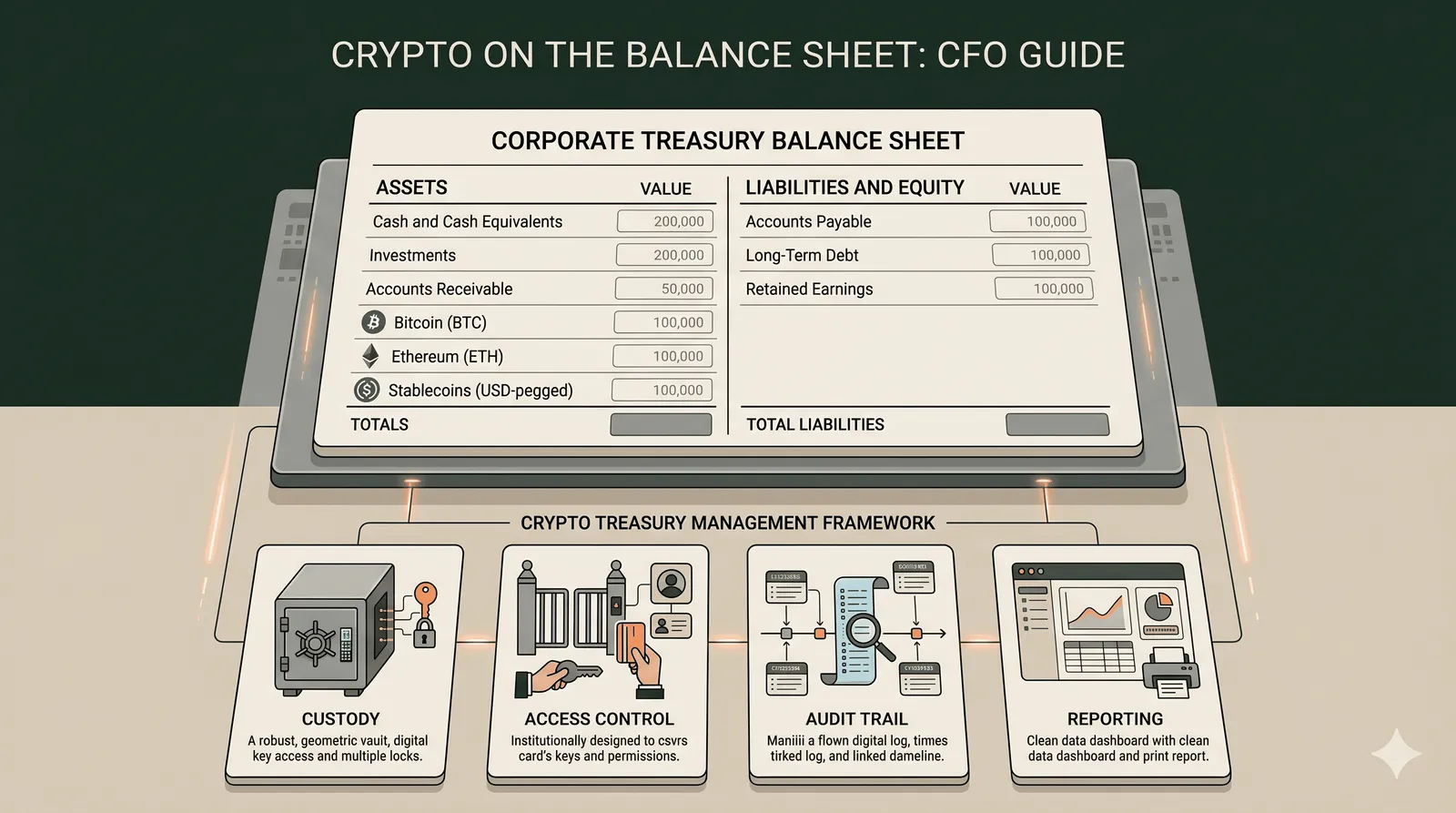
Crypto on the Balance Sheet: CFO Guide
By Tommy Tietze, CEO of ArrowTrade AG Most companies think about crypto too late. They first ask whe...

Market Maker vs. Taker: Crypto Fees Explained
Market Maker vs. Taker: Crypto Fees Explained By Tommy Tietze, CEO of ArrowTrade AG Most traders spe...

Crypto Drawdown Explained
By Tommy Tietze, CEO of ArrowTrade AG Drawdown is one of the most honest risk metrics in trading. It...

MiCA Explained for Crypto Investors
By Tommy Tietze, CEO of ArrowTrade AG Crypto regulation used to feel like background noise. For many...

Systematic vs. Emotional Trading
By Tommy Tietze, CEO of ArrowTrade AG Most traders do not lose control in calm markets. They lose co...

USDT, USDC and FDUSD Explained
By Tommy Tietze, CEO of ArrowTrade AG Stablecoins are often treated as if they were simply “digital ...

Crypto Taxes Germany 2026
By Tommy Tietze, CEO of ArrowTrade AG Crypto taxes are no longer a niche topic. Anyone trading Bitco...