DCA Bot vs. Grid Bot vs. HFT Bot: Which Strategy Works When?
 By Felix Götz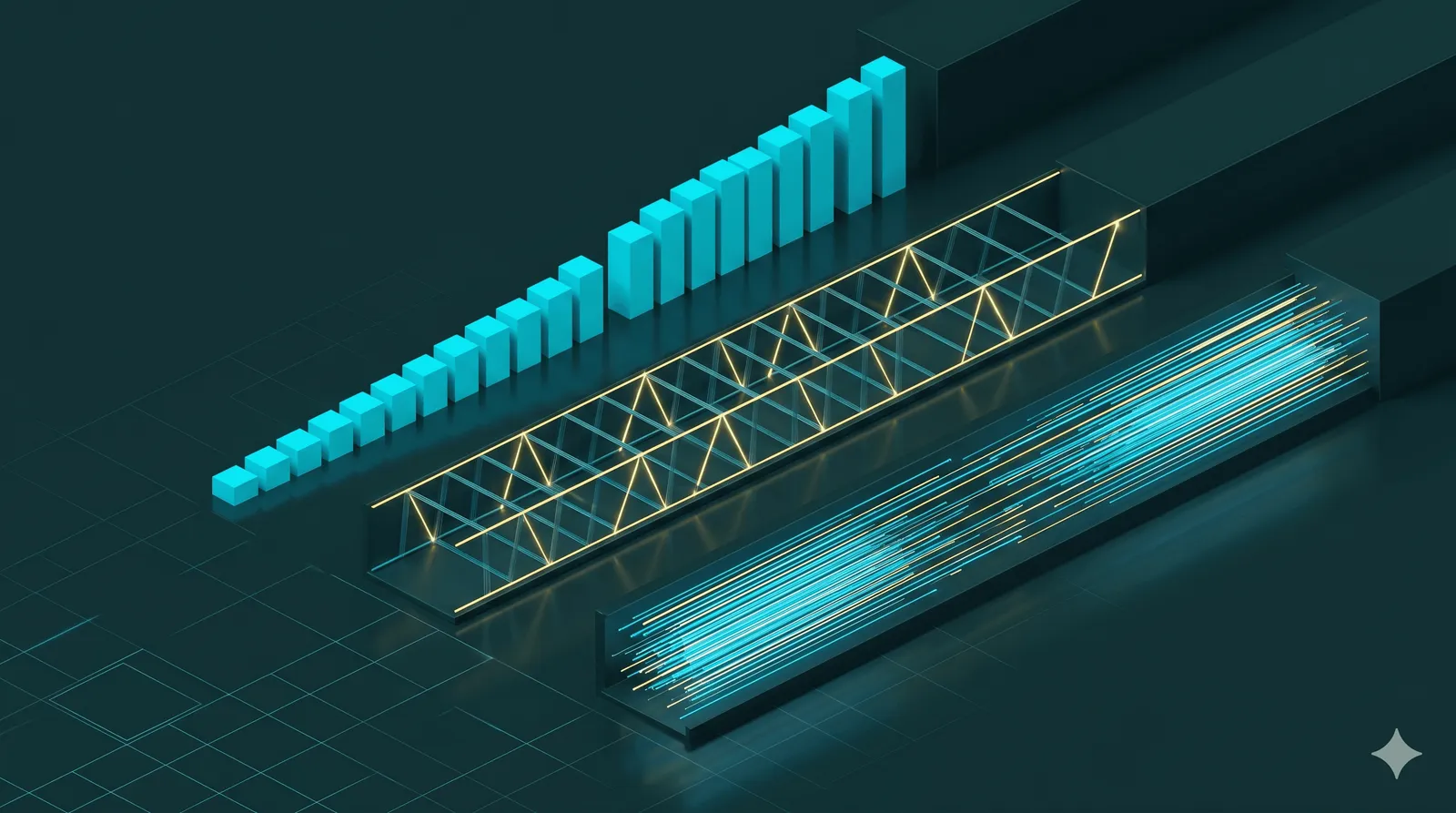
By Felix, Founder of unCoded and Crypto Trader since 2016.
Most comparisons put DCA against Grid. Two options, one recommendation, done. What is completely missing is the third category: HFT or micro-trading. It gets ignored because hardly any commercial bot offers it. For us, it is the core of the product. Therefore, it belongs in this comparison.
This article explains all three strategies with concrete math. It shows which market environment suits which strategy. It addresses the limits of each one honestly.
The Three Strategies in 60 Seconds
DCA (Dollar Cost Averaging): Buys a fixed amount at regular intervals. The current price is irrelevant. Goal: build a favorable average price over time. Works especially well in rising markets and over long periods.
Grid Trading: Places buy and sell orders in a fixed price grid. Earns from every price movement within the range. Works especially well in sideways markets where the price oscillates.
HFT / Micro-Trading: Executes a large number of very small trades. The bot often completes several thousand trades per day. Every single trade brings only minimal profit. The sum yields a positive result over time. Works in volatile markets, independent of the trend direction.
The question is never about finding the universally best strategy. The question is always about finding the strategy that fits the current market and your specific situation.
DCA Bot: Believing in the Long-Term Story
DCA is the simplest and most researched strategy. You regularly buy a fixed amount of an asset. Over a long period, this balances out volatility. You build a position at an average price.
How DCA works mathematically Suppose you invest 500 USD per month in Bitcoin over 12 months. Total investment: 6,000 USD.In a rising market, you buy cheap at the beginning and expensive at the end. Your average price remains below the final price. Result: unrealized profit. In a falling market, you buy expensive at the beginning and cheap at the end. Your average price sits above the final price. Result: unrealized loss. However, you received more coins for your money than with a one-time purchase at the start.In a sideways market, you sometimes buy cheap and sometimes expensive. Your average price stays close to the mean of the range. Result: little profit, little loss.
When DCA wins DCA works best if you believe in the long-term value appreciation of the asset. You need an investment horizon of at least 12 months. It requires the lowest active effort. You configure it once, let it run, and leave it alone.
When DCA fails In a clear bear market, you consistently buy into falling prices. This is mathematically correct since you accumulate more coins. Psychologically, it is stressful and causes short-term losses. DCA is no guarantee of profit. It is a discipline strategy for long-term accumulation.In sideways markets, DCA generates almost no yield. You build a position, but the price does not move sustainably in one direction. Better tools exist for sideways phases.
Grid Bot: Navigating Sideways Markets
Grid Trading relies on a simple idea. If the price fluctuates within a range, you buy every dip and sell every rise. The system does this automatically within a fixed grid.
How Grid mechanics work You define a price corridor (for example ETH/USDT between 1,800 and 2,200 USD) and a grid spacing (for example 50 USD distance between levels). The bot places a limit order at each level. Buy orders go below the current price. Sell orders go above. If the price falls from 2,000 to 1,950, the bot buys. If it rises back to 2,050, the bot sells. The profit per round equals the grid spacing minus trading fees. With a 50 USD spacing and 0.1% fees on both sides, about 46 USD remain per round.In an active sideways market, the price crosses the levels multiple times per day. The bot continuously generates small profits.
Range selection as a success factor The grid bot only works within the defined range. If the price breaks the range upwards, you sold too early and miss the rally. If it breaks downwards, you hold positions at a loss and the bot stops. Choosing the range is the most critical decision in grid trading. Too tight: few trades, little profit. Too wide: individual rounds bring less and the bot runs inefficiently. The ideal range relies on the historical volatility of the pair and the current market phase.
When Grid wins Grid bots thrive when the market moves sideways or is slightly choppy. There is no clear trend, but enough movement for regular price swings within the range. Historically, the crypto market spends a significant amount of time in these phases.
When Grid fails Grid bots are highly problematic in clear trending markets. During a strong rally, the bot sells too early. During a severe drop, it buys into falling prices and accumulates losing positions. Grid trading is no all-weather strategy.
HFT Bot / Micro-Trading: Monetizing Volatility Directly
HFT stands for High-Frequency Trading. In the institutional sector, algorithms trade in microseconds and profit from minimal price differences. In the retail sector, things look different. Here we talk about micro-trading. The system executes many small trades per day. Each yields only a fraction of a percent in profit. The sum delivers a positive result.
Micro-Trading vs. Scalping Scalping is manual, fast trading. A scalper sits in front of the screen, identifies short-term opportunities, and trades them actively. This is time-consuming and emotionally stressful.Micro-trading is the automated version. The bot handles identification and execution. It works faster than a human. It trades without emotion. It remains active 24/7. Individual profits per trade are smaller than with manual scalping. The frequency is significantly higher.
How Micro-Trading works The bot monitors the market continuously. It opens positions when specific conditions are met, such as price movement, volume changes, or order book signals. Every position has a tight profit target. The bot sells as soon as the target is reached. The holding period per position typically ranges from minutes to hours. The bot only sells when the position is profitable. Open positions remain open until the profit target is reached. Every closed trade is profitable by definition. Paper losses on open positions can occur. They do not get realized.
The importance of latency Milliseconds determine execution quality in micro-trading. A signal recognized now might be outdated if the order reaches the exchange 500ms later. A low-latency VPS connected to Binance improves execution quality noticeably. A location in the same data center region is ideal. This forms a practical argument for self-hosted infrastructure. You control exactly where your bot runs.
When Micro-Trading wins In volatile markets. Micro-trading profits from price movements in both directions. The overall market direction is entirely irrelevant. As long as prices move, the bot finds opportunities. The crypto market almost always provides movement. This makes micro-trading the only strategy in this comparison that does not depend on a specific market direction.
When Micro-Trading fails In highly illiquid markets with low trading volume. Low liquidity leads to poor order execution. The spread consumes the profit. Choosing the right trading pair is crucial. High-volume pairs like BTC/USDT and ETH/USDT work much better than exotic altcoins with thin order books. Micro-trading also finds fewer opportunities during phases of extreme low volatility. Such phases are rare in crypto and usually very short-lived.
Side-by-Side Comparison
Best market condition:
- DCA: Long-term uptrend
- Grid: Sideways market with regular swings
- HFT/Micro-Trading: Volatile markets, direction-independent
Recommended minimum capital:
- DCA: Makes sense from 500 USD
- Grid: From 1,000 USD (depends on grid spacing)
- HFT/Micro-Trading: 2,000 USD recommended
Technical skill level for setup:
- DCA: Low (configuration in minutes)
- Grid: Medium (range and grid require careful planning)
- HFT/Micro-Trading: Medium to High (VPS setup, latency optimization)
Time commitment after setup:
- DCA: Minimal (check once a week)
- Grid: Medium (adjust range regularly)
- HFT/Micro-Trading: Low to Medium (performance monitoring, occasional pair adjustments)
Risk profile:
- DCA: Market risk. No execution risk.
- Grid: Market risk plus range-break risk.
- HFT/Micro-Trading: Low single-trade risk, paper loss risk on open positions.
Fee sensitivity:
- DCA: Low (few trades per month)
- Grid: Medium (many trades, sufficient spread per round)
- HFT/Micro-Trading: High (thousands of trades, every basis point counts)
Strategy Alignment with Market Conditions
Bull Market: DCA is the natural choice. You buy continuously and profit from the trend. Grid works with limitations because the price breaks the upper range limit. Micro-trading can run alongside. It profits from the accompanying volatility, not the trend itself.
Bear Market: The hardest phase for all strategies. DCA accumulates falling assets. Grid accumulates losing positions. Micro-trading can work if enough volatility exists. Opportunities are rarer. Honest recommendation: In a clear bear market, sometimes the best strategy is to stay out of the market entirely.
Sideways / Choppy: Grid bots and micro-trading dominate. Grid profits from the range movement. Micro-trading profits from the volatility within the movement. DCA continues but generates little yield.
High Volatility (Pumps, Dumps, News): Micro-trading is strongest here. Every sharp price movement creates opportunities. Grid bots risk the price leaving the range. DCA does not profit directly from volatility.
Combining Strategies
Combinations make the most sense for many investors.A typical multi-strategy setup: 50 percent capital in DCA for long-term accumulation. 30 percent in micro-trading for continuous yield. 20 percent in cash reserve as a buffer.The logic: DCA builds positions long-term. Micro-trading generates ongoing cash flows. The cash reserve cushions drawdowns and allows manual buys during sharp dips.You do not need the same bot for this combination. You can run a DCA bot with a cloud provider and a micro-trading bot on your own server. Crucial rule: Create separate API keys for each system. Only grant trading rights. Neither system should influence the other.
Common Mistakes and Strategy Traps
DCA in an asset without a long-term thesis. DCA requires conviction that the asset will appreciate. DCA into a memecoin is speculation with automated execution.
Setting the grid range too tight or too wide. Too tight: The price leaves the range after the first move. Too wide: Individual grid rounds generate too little profit to cover fees. Use historical volatility data to calibrate the range properly.
Micro-trading on illiquid pairs. A pair with 100,000 USD daily volume lacks the liquidity for thousands of micro-trades. Orders execute poorly. The spread eats the profit. Stick to top pairs with massive volume.
Starting all strategies at once. Beginners activate three different strategies on day one and lose oversight. Start with one strategy. Understand it, optimize it, and then gradually add more.
Evaluating performance after one week. No strategy shows its true character in seven days. DCA takes months. Grid needs at least one full market cycle. Micro-trading requires two to four weeks for reliable data. Give every strategy the time it needs.
FAQ
Which strategy is the most profitable? That depends on the market. DCA wins in uptrends. Grid wins in sideways markets. Micro-trading wins in volatile phases. No single strategy dominates every market environment.
Can I run DCA and Grid simultaneously? Yes. You can run both in parallel. Use separate API keys. Ensure your capital is split adequately.
Does HFT work for retail investors? In the institutional sense (microsecond trades on traditional exchanges): no. In the sense of automated micro-trading with hundreds or thousands of small trades per day: yes. The crypto market is highly accessible. API access barriers are low. Trading happens 24/7.
Which strategy requires the least capital? DCA works from 500 USD. Grid needs more capital to cover all levels in the grid. Micro-trading requires 2,000 USD to provide enough liquidity for the high trade frequency.
Which strategy is the safest? No strategy eliminates market risk. DCA carries the lowest execution risk. Grid carries range-break risk. Micro-trading carries paper-loss risk on open positions. DCA is the simplest approach. Micro-trading is the most market-independent approach.
How much time do I need to invest per day? DCA requires zero daily intervention. Grid takes five minutes to check the range. Micro-trading takes ten minutes to check the dashboard. None of these strategies require active daily management.
What happens to Grid bots in trending markets? In a strong uptrend, the bot sells early and misses the rally. In a strong downtrend, it buys into falling prices and accumulates losses. Adjust the range regularly to the current market condition.
Which bot suits which strategy? Most cloud bots offer DCA and Grid. Micro-trading requires specialization. Few commercial providers support it. unCoded specializes in micro-trading and micro-DCA. It operates exclusively on the spot market.
unCoded — uncoded.ch Documentation — uncoded.ch/docs ArrowTrade AG, Switzerland
Recommended Reading

How to Set Up a Binance API Key for Trading Bots: The Complete 2026 Security Guide
By Tommy Tietze, CEO of ArrowTrade AG Your Binance account holds 10,000 USD. You want to connect a t...
Why Profit-Sharing Beats Subscription: Trading Bot Pricing Models 2026 Explained
Imagine you go to an asset manager and they tell you: my fee is 600 dollars a year, regardless of wh...
Non-Custodial Crypto Trading Bots: The Complete Guide for 2026
Anyone who had money on FTX in 2022 knows the answer to a question almost nobody asked before: Who a...