Slippage and Market Depth in Crypto Trading
 By Tommy Tietze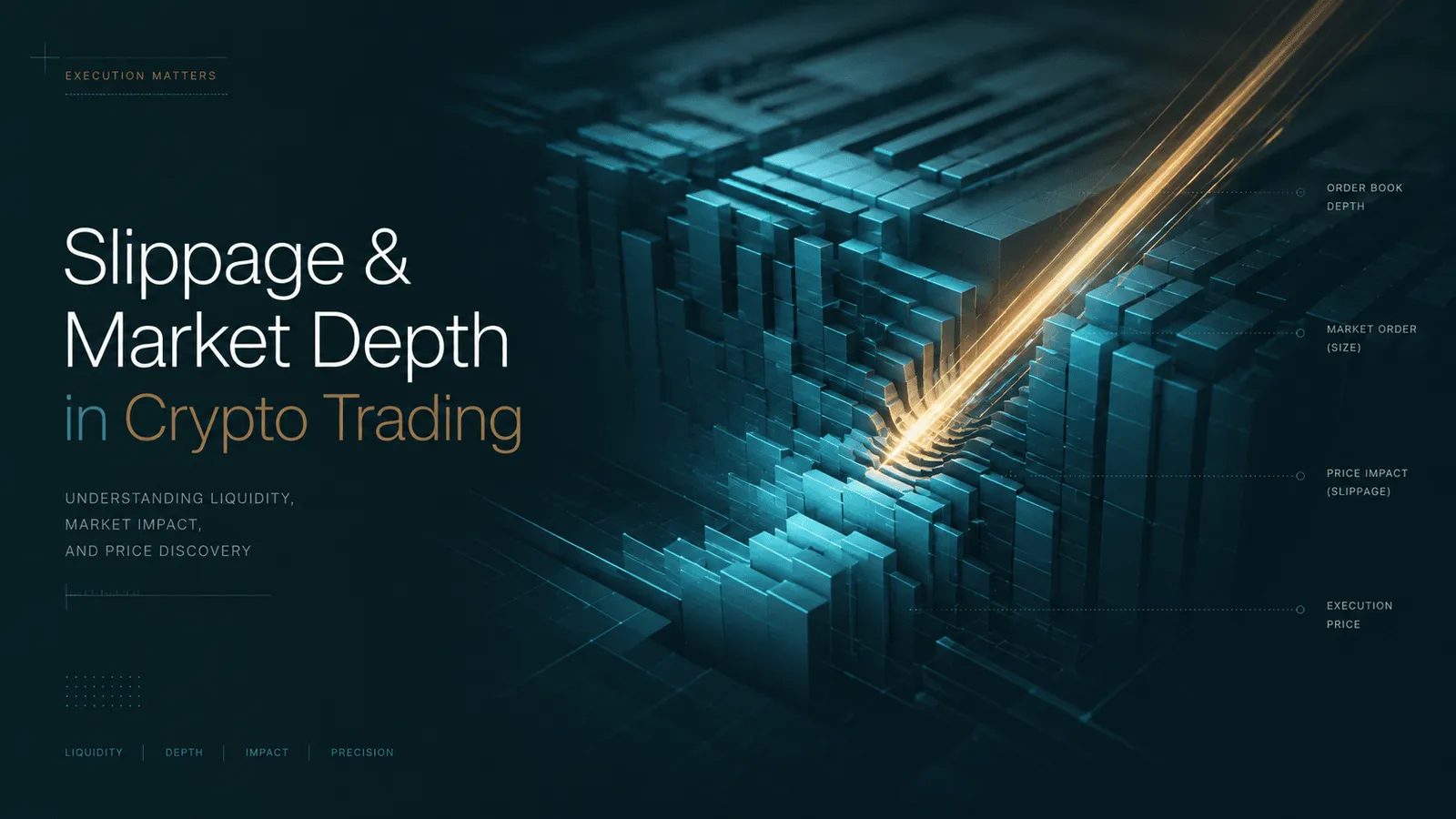
By Tommy Tietze, CEO of ArrowTrade AG
Most traders focus on the chart. They see a breakout, a crossing moving average, or a perfect RSI level. They assume they can buy at the exact price on the screen.
In reality, the price on the screen is just the last traded price. It is not a guarantee. Execution depends on the order book. If the order book is thin, your trade will move the market. That movement costs money. It is called slippage.
Many traders test their strategies in a vacuum. They assume infinite liquidity. They assume every limit order fills and every market order gets the exact ticker price. That is how backtests create millionaires. And it is how live markets destroy them.
This article explains market depth, why slippage is the invisible tax on your trading strategy, and why automated systems must respect liquidity before they can scale.
What Market Depth Means
Market depth is the amount of resting liquidity in an order book. It shows how many buy and sell limit orders are waiting at various price levels around the current market price.
If a market is "deep," it means there are large orders waiting close to the current price. You can buy or sell a large amount of the asset without moving the price significantly. Bitcoin and Ethereum on major exchanges usually have deep markets.
If a market is "thin," it means there are very few orders waiting. A relatively small market order will eat through the available liquidity and push the price up (when buying) or down (when selling). Many smaller altcoins have thin markets.
Market depth is not a fixed number. It changes constantly. It drops during high volatility, during weekends, or when market makers pull their liquidity to avoid risk.
What Slippage Is
Slippage is the difference between the expected price of a trade and the price at which the trade is actually executed.
If you place a market buy order for Bitcoin when the ticker says 95,000, but your order is large enough that it consumes liquidity up to 95,050, your average entry price will be higher than 95,000. That difference is negative slippage.
Slippage is not an exchange error. It is not a scam. It is the mechanical reality of supply and demand. If you want to buy instantly, you must take what the order book offers. If the order book is thin, you pay a premium for speed.
Why Slippage Kills Trading Bots
For manual traders who hold assets for months, a 0.5% slippage on entry is annoying, but it rarely ruins the investment.
For automated trading systems, slippage is lethal. A trading bot often relies on executing many trades with a smaller profit margin per trade. If your strategy expects an average profit of 1% per trade, but you lose 0.3% to slippage on the entry and another 0.3% to slippage on the exit, your edge is gone.
Add exchange fees to that math, and a strategy that looks highly profitable in a backtest becomes a machine that slowly bleeds capital in production.
This is why trading illiquid altcoins with a bot is usually a trap. The chart of a micro-cap altcoin might show massive volatility and frequent trading signals. It looks like a goldmine for an algorithm. But when the bot actually tries to execute, the lack of market depth destroys the theoretical profit.
The Connection to Maker and Taker Fees
In the previous article, we discussed Market Maker vs. Market Taker mechanics. Internal link: market-maker-vs-taker-crypto-fees-explained
Slippage and taker fees usually arrive together. When you use a market order, you are a taker. You pay the higher taker fee, and you accept the risk of slippage because you cross the spread and consume liquidity.
You can avoid slippage by using limit orders (acting as a maker). Your limit order rests in the book, ensuring you only get filled at your specified price or better.
But limit orders have their own hidden cost: execution risk. In a fast-moving market, your limit order might not get filled. The price might move away, and your bot misses a highly profitable trade.
Trading systems constantly balance these two risks. Do you pay the slippage and the taker fee to guarantee the entry? Or do you avoid slippage with a limit order and risk missing the trade entirely? There is no perfect answer, but a serious setup must know which risk it is taking.
Market Depth as a Limit on Position Sizing
Most traders define their position size based on their total capital and risk tolerance. If they have a 100,000 USD account and want to risk 1%, they calculate their size accordingly.
Market depth introduces a hard, external limit to position sizing. You cannot trade a 50,000 USD position in a coin where the order book only has 5,000 USD of liquidity within a 1% price range. If you try, your own order will cause a massive price spike, resulting in severe slippage.
As your account grows, your trading universe shrinks. A strategy that works perfectly with 1,000 USD might completely fail with 100,000 USD because the larger orders create too much market impact. Serious crypto trading means understanding that scaling capital requires scaling into deeper markets, not just increasing the trade size on the same illiquid tokens.
The Illusion of the "Perfect" Entry
Emotional traders hate slippage because it makes them feel like they got a bad deal. They see the ticker at one price and their fill at a worse price, and they blame the exchange.
Systematic traders treat slippage as an operational cost. They do not expect perfect entries. They expect realistic execution.
If your backtests do not include a realistic assumption for slippage and trading fees, you are not backtesting a strategy. You are playing a video game.
Automated Spot Trading and Liquidity
At unCoded, we focus exclusively on automated crypto spot trading.
This architectural decision removes the liquidation risks of leveraged futures, but it does not remove the rules of liquidity. If a user configures a bot to trade highly illiquid pairs on Binance, the system will execute the rules, but the user will pay the price in slippage.
This is why unCoded relies on the user’s Binance account via API. Binance generally offers the deepest liquidity pools in the crypto market.
But even on the largest exchange, not all pairs are equal. BTC/USDT has deep liquidity. A newly listed, low-cap altcoin traded against a smaller stablecoin might have a very thin order book.
Control over your capital means taking responsibility for where you deploy it. A bot is an execution tool. It cannot create liquidity where none exists.
Practical Checklist
Before running a strategy:
- What is the average daily volume of the trading pair?
- How tight is the bid-ask spread during normal conditions?
- How does the order book look during high volatility?
- Are you using market orders (Taker) or limit orders (Maker)?
- Has your backtest accounted for exchange fees?
- Has your backtest accounted for realistic slippage?
- Is your position size too large for the current market depth?
FAQ
What is slippage in crypto trading? Slippage is the difference between the expected price of a trade and the actual execution price. It happens when market orders consume resting liquidity in the order book, pushing the price up or down.
What is market depth? Market depth refers to the volume of open buy and sell limit orders at different price levels in an order book. Deep markets can absorb large orders without significant price changes.
How can I avoid slippage? You can avoid slippage by using limit orders instead of market orders. However, limit orders carry execution risk, meaning your order might not be filled if the market price moves away.
Why does slippage matter for trading bots? Trading bots often execute many trades with smaller profit margins. If a bot consistently suffers from slippage, those small losses accumulate quickly and can completely destroy the strategy's mathematical edge.
Can I trade illiquid altcoins with a bot? You can, but it is highly risky. Illiquid markets have wide spreads and low market depth. Automated market orders in these conditions will suffer severe slippage, often making the strategy unprofitable.
Conclusion
Slippage is the invisible tax of the crypto market. It does not show up on your monthly invoice, but it is deducted directly from your account equity with every sloppy execution.
Many investors spend months trying to optimize their entry indicators, but they ignore the mechanics of the order book. That is the wrong priority. An average strategy with excellent execution will usually outperform a brilliant strategy with terrible execution.
Systematic trading means accepting reality. The market does not owe you the ticker price. It only gives you what the order book contains.
A serious crypto setup understands market depth, limits position sizes based on available liquidity, and models slippage into every calculation.
Disclaimer: This article is for educational purposes only and is not financial advice. Crypto trading, stablecoins, and automated trading strategies involve risk. Illiquid markets carry higher risks of slippage and volatility. Learn more about
unCoded: https://uncoded.ch
Built by ArrowTrade AG: https://arrowtrade.ch
Recommended Reading

Market Maker vs. Taker: Crypto Fees Explained
Market Maker vs. Taker: Crypto Fees Explained By Tommy Tietze, CEO of ArrowTrade AG Most traders spe...
Systematic vs. Emotional Trading
By Tommy Tietze, CEO of ArrowTrade AG Most traders do not lose control in calm markets. They lose co...
Crypto Volatility Explained
By Tommy Tietze, CEO of ArrowTrade AG Crypto volatility is usually discussed in the wrong tone. Some...

Position Sizing in Crypto Trading
By Tommy Tietze, CEO of ArrowTrade AG Many traders spend hours searching for the perfect entry. They...
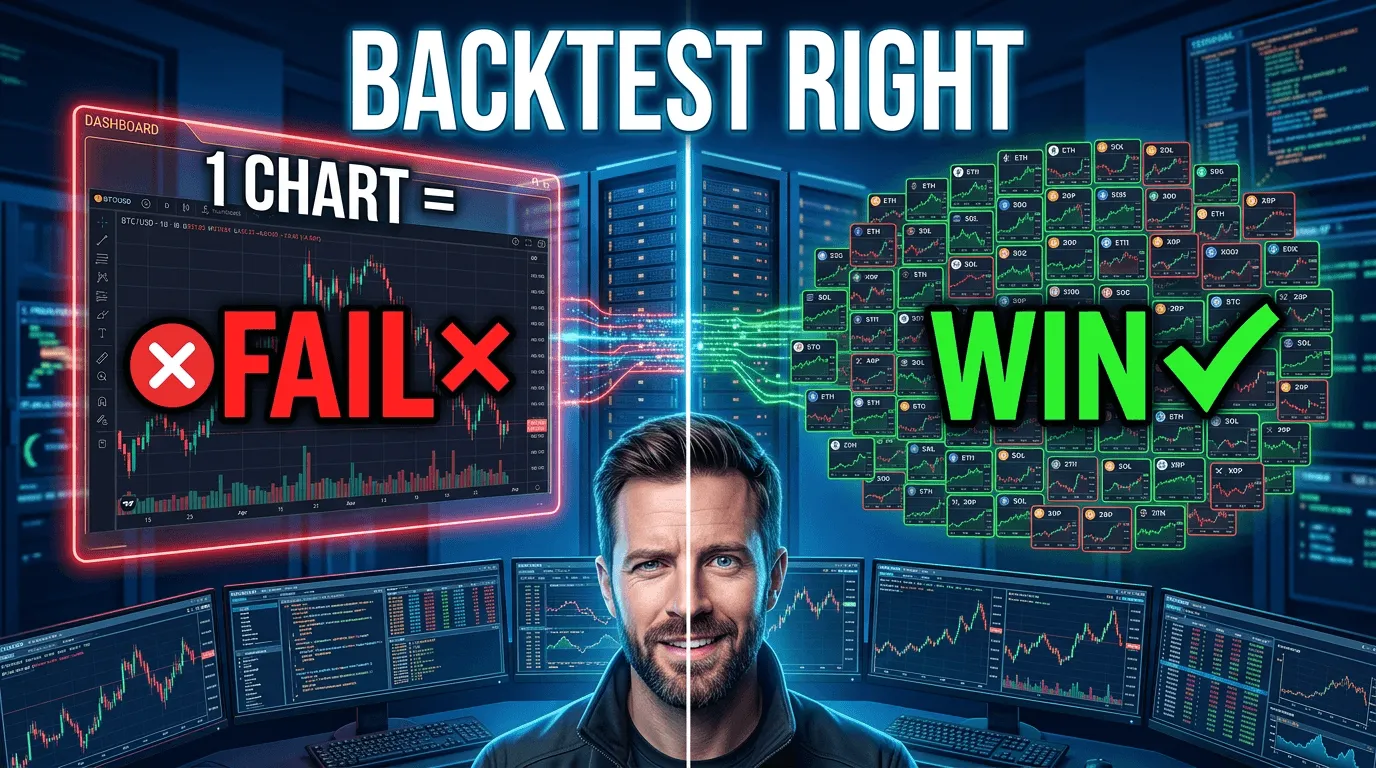
Why Your Crypto Trading Bot Backtest Fails: Test Against 100 Charts, Not One
By Felix – founder of unCoded, trading crypto since 2016. Every backtest you've ever run lies to you...