Crypto Taxes in Switzerland: Trader Guide
 By Tommy Tietze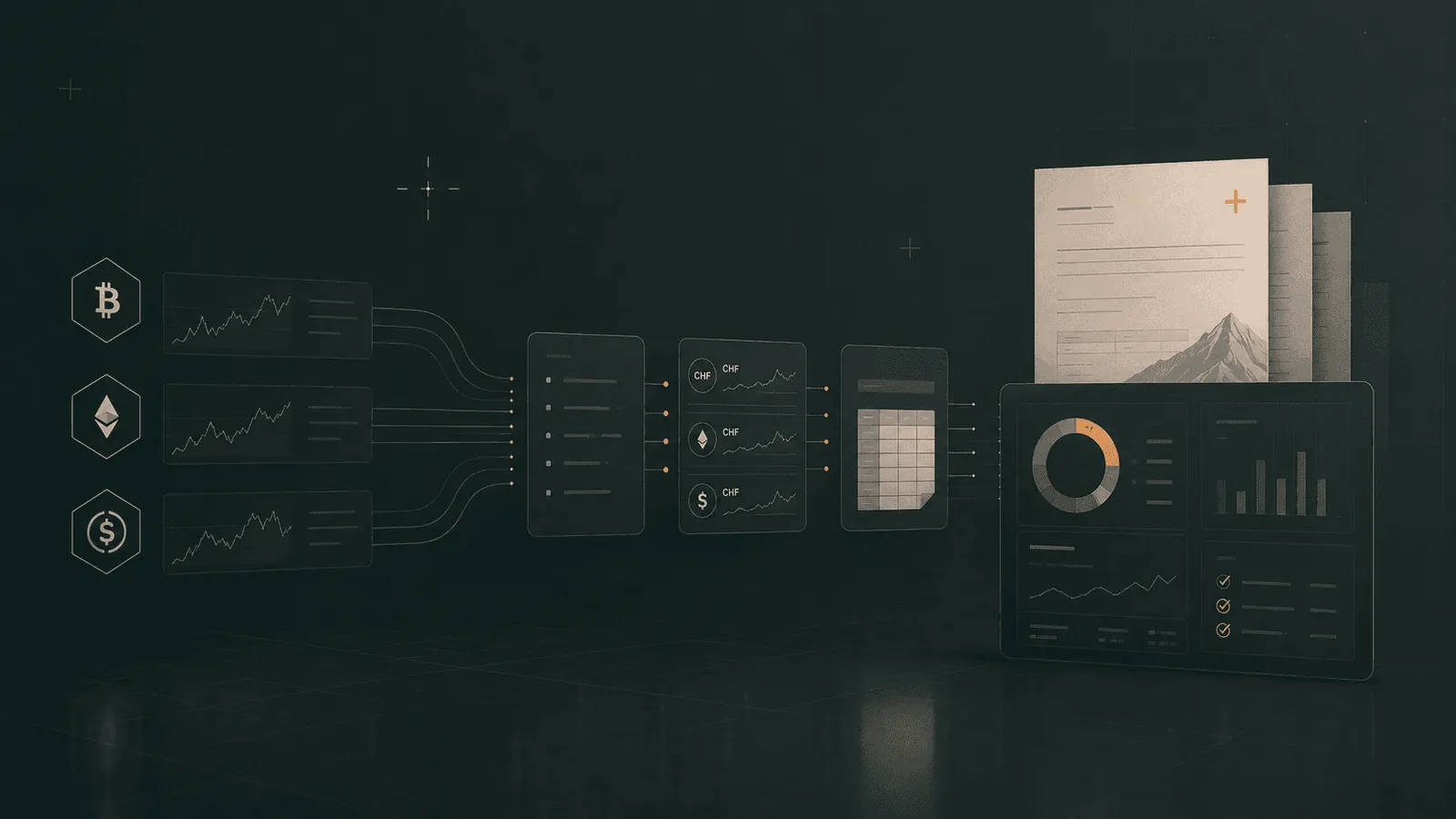
By Tommy Tietze, CEO of ArrowTrade AG
Switzerland has a strong reputation in crypto.
That reputation is deserved in many areas. The country has serious builders, clear institutions, experienced advisors and a long history of financial infrastructure. Zug, Lugano, Zurich and other Swiss locations have become part of the global crypto map for a reason.
Still, “crypto-friendly” does not mean “tax-free without records”.
For traders, founders and company owners, the Swiss tax view is more practical than ideological. Crypto can be held, traded, valued and reported. The question is whether the person or company behind the activity can explain what happened.
The Swiss Federal Tax Administration states that cryptocurrencies are subject to direct federal tax, withholding tax and stamp duty at federal level, and it publishes a working paper on the taxation of different types of cryptocurrencies.
That sentence is enough to change the mindset.
If crypto is part of your wealth, your trading activity or your business setup, it belongs in your tax process.
Why Swiss crypto tax is different from the German discussion
Many crypto tax articles in the DACH region are written from a German perspective.
That often creates confusion for Swiss readers. Germany has its own rules around private sales transactions, holding periods and tax treatment. Switzerland works differently.
In Switzerland, the starting point for private individuals is usually the distinction between private wealth management and professional or self-employed trading activity. The Swiss Federal Tax Administration explains that depending on the type, scope and financing of transactions, a person may move from private wealth management into self-employed activity, and in that case capital gains from selling payment tokens can become taxable income.
This is where active traders need to be careful.
A person who holds crypto privately may be treated differently from someone who trades frequently, uses external financing, runs a business-like setup or creates a pattern that looks closer to professional trading.
The exact assessment depends on the facts.
For a trader, that means the documentation should show more than the final account balance. It should show what was bought, sold, transferred, earned, paid in fees and held at year-end.
Crypto and Swiss wealth tax
Switzerland taxes wealth at the cantonal and communal level.
The Swiss Federal Tax Administration classifies payment tokens held as pure digital means of payment as assessable, movable and intangible assets that fall under movable capital assets for tax purposes, and these tokens are subject to cantonal wealth tax.
That is a key difference for many international readers.
A private capital gain may be one question. The year-end wealth value is another.
If you hold Bitcoin, Ethereum, stablecoins or other crypto assets privately, the tax office may still expect them to appear in the wealth section of the tax return. The value at the end of the tax period matters.
The Swiss Federal Tax Administration states that payment tokens should be declared at fair market value at the end of the tax period, and if no current valuation price can be determined, the token should be declared at the original purchase price converted into Swiss francs.
For traders, this creates a practical requirement.
You need a reliable snapshot of holdings.
You need the CHF value.
You need to know which exchange, wallet or account held the asset.
And if your crypto is spread across several venues, you need a way to reconcile all of it.
Valuation in Swiss francs
Swiss tax reporting runs in Swiss francs.
The Swiss Federal Tax Administration states that it and all cantonal tax administrations estimate taxes in Swiss francs, and that compensation, wages, income and other amounts paid in foreign currency must be converted into Swiss francs.
That matters in crypto because most trading pairs are not quoted in CHF.
A trader may buy ETH with USDT, sell into FDUSD, pay fees in BNB, move funds through USDC and later convert part of the portfolio into CHF. The exchange interface can make that look simple. The tax file still needs a coherent CHF view.
The Swiss Federal Tax Administration publishes ICTax rate lists, and the crypto taxation working paper states that the FTA publishes tax values for the most common cryptocurrencies in its rate list (Swiss Federal Tax Administration, ICTax).
For crypto assets without an official tax value, the working paper states that the market value from a leading trading platform can be used.
This is where good habits save time.
If the valuation source changes every year, the file becomes harder to explain. If the trader cannot show where the price came from, the tax discussion becomes less comfortable. A clean process should define which source is used, when the snapshot is taken and how the values are stored.
Private capital gains and trading activity
Switzerland is attractive for private crypto holders because private capital gains can often be tax-free when the activity remains within private wealth management.
The Swiss Federal Tax Administration states that the mere holding of payment tokens acquired through crypto exchanges generally does not generate income or returns subject to income tax and withholding tax.
That point gets repeated often.
The problem is that traders sometimes hear only the comfortable part.
The same Swiss Federal Tax Administration paper also states that depending on the type, scope and financing of transactions, the activity may qualify as self-employed activity rather than private wealth management, in which case capital gains from selling payment tokens are taxable as business income.
A person trading once in a while and a person running an intensive, systematic setup are not automatically in the same situation.
The line is factual.
How often do you trade?
How large is the activity relative to your wealth?
Do you use debt?
Do you trade derivatives?
Do you depend on the income?
Do you behave more like a private holder or more like a professional market participant?
These are the questions a tax advisor will care about. A trader should care before year-end.
Staking, mining and airdrops
Trading gains are only one part of the crypto tax conversation.
Crypto can also create income.
The Swiss Federal Tax Administration states that mining rewards from proof-of-work activity are generally compensation for mining activity and can be treated as taxable income, with the specific classification depending on the circumstances.
The same working paper addresses staking and notes that values received through staking can be relevant for income tax, with the amount determined at the time of receipt and converted into Swiss francs.
The Swiss Federal Tax Administration also states that airdrops are subject to income tax at the time of allocation in the amount of their market value when the holder receives additional units without having to pay for them.
These areas are easy to underestimate.
A trader may focus on buys and sells while ignoring small credits, staking rewards, referral payments, campaign rewards or airdrops. The values may look small individually. Over a year, and across several accounts, they can become relevant enough to document.
The record should show when the asset was received, what it was worth in CHF, why it was received and where it later moved.
A CSV without context is often not enough.
Stablecoins in a Swiss tax file
Stablecoins feel boring compared with Bitcoin or Ethereum.
That is exactly why they get ignored.
For tax documentation, stablecoins can still matter. They can represent holdings at year-end, quote assets for trades, intermediate assets in conversions, fee sources or liquidity parked between trading decisions.
A USDT balance is still a crypto asset position. A USDC to BTC trade is still part of the transaction history. FDUSD used for Binance spot pairs can still appear in exports, balances and realized trade data.
The Swiss tax question is not whether the stablecoin feels volatile.
The question is whether it exists as an asset, whether it moved, whether it was used in taxable or reportable activity and how it is valued in CHF.
This becomes important for automated spot trading.
A bot may trade across stablecoin pairs and create many small fills. If the user only looks at the performance dashboard, the tax file may miss the mechanics behind that result. The exchange export has to explain the path.
Stablecoins are infrastructure for trading.
They also become data points for reporting.
Automated trading creates more records
Manual trading can already create a messy tax file.
Automated trading can multiply that problem.
A system that trades frequently may create many small transactions. Each trade can include timestamps, pairs, fees, quote assets, partial fills and realized results. If several assets are traded, the record becomes more complex.
That complexity is manageable if the setup is prepared.
It becomes painful when the trader waits until tax season.
For unCoded, this matters because the product is built for automated crypto spot trading on Binance. The user’s capital stays on the user’s Binance account, and the API setup is designed without withdrawal rights. That keeps the account relationship and asset custody clearer than models where funds move to an external trading platform.
The tax work still remains with the user.
The advantage is operational clarity. The exchange account is the user’s account. The trade history is available through Binance exports. The assets do not disappear into a black box.
For a Swiss trader or company, that structure helps only if the data is exported and stored properly.
What Swiss traders should document
A good crypto tax file does not need to look complicated.
It needs to be complete enough that another person can follow it.
At minimum, a Swiss crypto trader should keep:
Year-end holdings
All crypto assets held at the end of the tax period, including BTC, ETH, stablecoins and smaller assets.
CHF valuation
The valuation source, the date and the CHF value used for the tax return.
Trade history
Buys, sells, swaps, fees, timestamps, trading pairs and exchange account information.
Transfers
Movements between own wallets, exchanges and custodians should be identifiable as transfers.
Income events
Staking rewards, mining rewards, airdrops, referral rewards and other crypto income should be recorded with CHF value at receipt.
Exchange exports
CSV exports should be downloaded regularly and stored in a place that remains accessible.
Notes on special cases
Unusual transactions, chain migrations, lost access, exchange restrictions or manual corrections should be explained while the memory is fresh.
The best tax file is usually built during the year.
Trying to reconstruct a year of crypto activity in March is a bad operating model.
Private person or company
The Swiss tax view changes when crypto is held through a company.
A private person may focus on wealth tax, private capital gains, possible income events and the question of professional trading. A company has accounting, balance sheet, profit and loss, internal control and audit questions.
If a Swiss company holds crypto, the discussion moves into treasury policy and governance.
Who owns the account?
Who approves trades?
Who has access to API keys?
Which valuation source is used?
Who reconciles balances?
How are fees recorded?
Which advisor reviews the tax treatment?
For a company, “we hold some crypto” is not enough.
The board, accountant and tax advisor need a process. That process should exist before the trading activity becomes large.
This is also why crypto in Switzerland should be treated seriously even in a friendly environment. A strong jurisdiction does not replace internal discipline.
What changes with international reporting
Swiss traders should also watch the broader reporting environment.
The OECD Crypto-Asset Reporting Framework, known as CARF, is designed to create an international reporting framework for crypto-assets. Switzerland has been working on integrating crypto-asset reporting into the automatic exchange of information environment, and the Federal Council stated that provisions on crypto-assets contained in the AEOI Act and AEOI Ordinance shall not apply in 2026.
The exact timeline and implementation details should be checked with qualified advisors.
The direction is still visible.
Crypto reporting is becoming more structured internationally. The EU has DAC8. The OECD has CARF. Switzerland is not outside that conversation.
For traders, this reinforces the same operational point.
Clean records are no longer a nice-to-have.
They are part of serious crypto activity.
Common mistakes in Swiss crypto tax
Treating “crypto-friendly” as “no reporting”
Switzerland may be a strong crypto jurisdiction, but crypto assets still need to be declared where applicable. Wealth tax alone makes year-end holdings relevant for many private holders.
Ignoring CHF valuation
Tax reporting needs Swiss franc values. A USDT, BTC or ETH balance still needs a CHF view at the relevant time.
Mixing personal and business activity
A founder who trades privately, holds company crypto and uses several exchanges should keep those activities separated. Mixing them creates avoidable tax and accounting work.
Forgetting income events
Airdrops, staking rewards, mining rewards and referral payments can create tax-relevant income events.
Assuming every trader is a private wealth manager
Frequent, systematic or business-like trading can raise the question of self-employed activity. The facts matter.
Waiting for tax season
Exchange data should be exported regularly. Access, formats and account status can change.
FAQ
Are crypto assets taxable in Switzerland?
Crypto assets can be relevant for Swiss taxes. The Swiss Federal Tax Administration states that cryptocurrencies are subject to direct federal tax, withholding tax and stamp duty at federal level, and payment tokens can be subject to cantonal wealth tax (Swiss Federal Tax Administration, Swiss Federal Tax Administration).
Do private crypto holders pay income tax on gains in Switzerland?
The mere holding of payment tokens acquired through crypto exchanges generally does not generate income or returns subject to income tax and withholding tax, according to the Swiss Federal Tax Administration. If the activity qualifies as self-employed trading rather than private wealth management, capital gains can become taxable as business income.
Do I have to declare Bitcoin in my Swiss tax return?
Payment tokens are treated as assessable movable intangible assets and are subject to cantonal wealth tax, according to the Swiss Federal Tax Administration. That means year-end crypto holdings are relevant for Swiss wealth reporting.
How are crypto assets valued in Switzerland?
Payment tokens should be declared at fair market value at the end of the tax period, and if no current valuation price can be determined, they should be declared at the original purchase price converted into Swiss francs.
Are staking rewards taxable in Switzerland?
The Swiss Federal Tax Administration addresses staking as a tax-relevant receipt and states that the value should be determined at the time of receipt and converted into Swiss francs.
Why does automated trading make crypto taxes harder?
Automated trading can create many transactions, fees, partial fills and stablecoin conversions. The tax difficulty is often not the strategy itself, but the quality of the transaction records.
Conclusion
Switzerland gives crypto a serious environment.
That does not remove the need for serious records.
For private holders, year-end wealth values matter. For active traders, the line between private wealth management and professional activity deserves attention. For companies, crypto belongs inside accounting, treasury and governance processes.
Automated spot trading adds another layer.
The trades may be small, but the records still count. A bot can create more transactions than a manual trader would ever want to reconstruct by hand. That is manageable when exports, valuations, transfers and income events are documented during the year.
For Swiss crypto traders, the smartest tax habit is simple.
Build the record while you trade.
This article is for educational purposes only and is not tax, legal or financial advice. Crypto tax treatment depends on personal circumstances, canton, activity profile and applicable law. Traders and companies should consult qualified Swiss tax advisors.
Learn more about unCoded: https://uncoded.ch Built by ArrowTrade AG: https://arrowtrade.ch
Recommended Reading

DAC8 Crypto Reporting: What Traders Should Know
By Tommy Tietze, CEO of ArrowTrade AG Crypto is moving into the same world as bank accounts, securit...
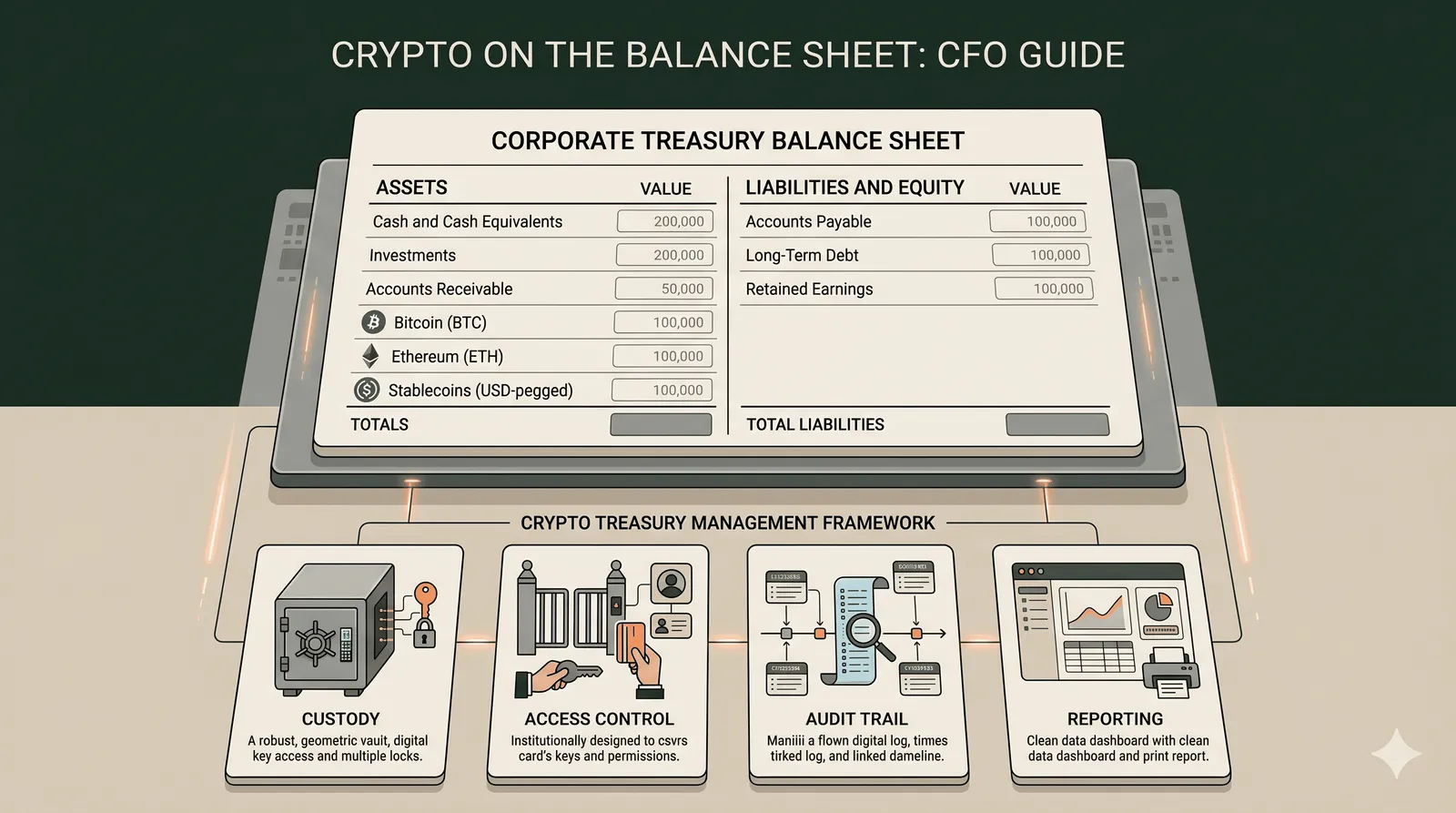
Crypto on the Balance Sheet: CFO Guide
By Tommy Tietze, CEO of ArrowTrade AG Most companies think about crypto too late. They first ask whe...

Market Maker vs. Taker: Crypto Fees Explained
Market Maker vs. Taker: Crypto Fees Explained By Tommy Tietze, CEO of ArrowTrade AG Most traders spe...

Crypto Drawdown Explained
By Tommy Tietze, CEO of ArrowTrade AG Drawdown is one of the most honest risk metrics in trading. It...

Systematic vs. Emotional Trading
By Tommy Tietze, CEO of ArrowTrade AG Most traders do not lose control in calm markets. They lose co...

USDT, USDC and FDUSD Explained
By Tommy Tietze, CEO of ArrowTrade AG Stablecoins are often treated as if they were simply “digital ...

Crypto Taxes Germany 2026
By Tommy Tietze, CEO of ArrowTrade AG Crypto taxes are no longer a niche topic. Anyone trading Bitco...