Fear & Greed Index in Crypto Trading
 By Tommy Tietze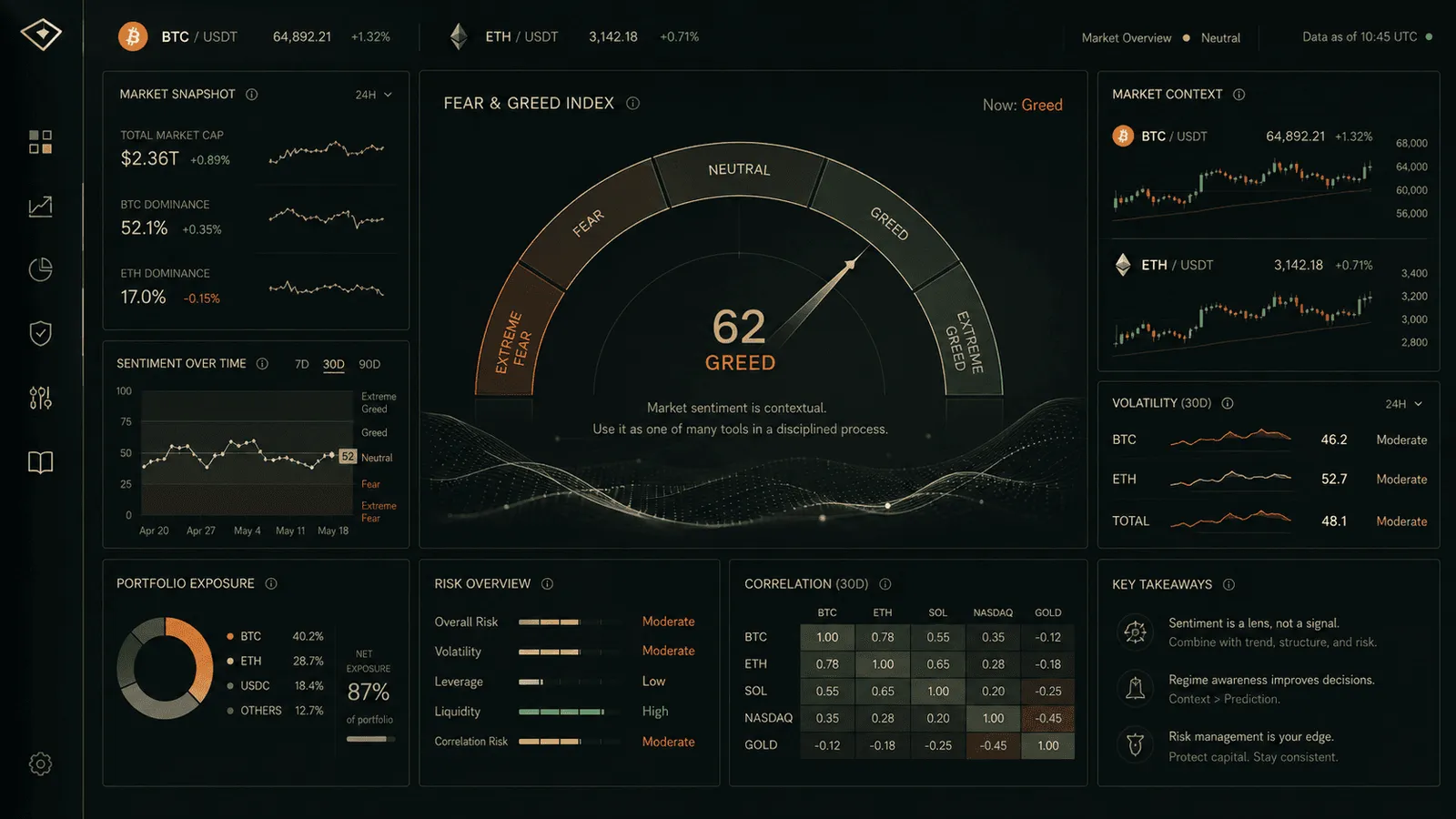
By Tommy Tietze, CEO of ArrowTrade AG
The crypto market does not only move on data.
It moves on emotion.
One week, people are afraid that Bitcoin is finished again. The next week, the same people are looking for the next altcoin that can do 10x. Nothing fundamental has to change for that mood swing to happen. A few green candles, a few loud posts on social media, and the market feels completely different.
That emotional shift is exactly what the Crypto Fear & Greed Index tries to capture.
The index is useful because it gives traders a quick read on market sentiment. It can show when the market is fearful, greedy or somewhere in between. Used properly, that information can support risk management, position sizing and timing.
Used badly, it becomes just another excuse to trade on emotion.
A sentiment indicator should never replace a strategy. It should help a trader notice when the market mood becomes extreme and when their own behavior starts to copy the crowd.
That is where the Fear & Greed Index becomes interesting for serious crypto spot traders.
What the Crypto Fear & Greed Index is
The Crypto Fear & Greed Index measures crypto market sentiment on a scale from 0 to 100, where lower values indicate fear and higher values indicate greed.
Alternative.me describes 0 as “Extreme Fear” and 100 as “Extreme Greed”.
The idea is simple enough.
When traders are afraid, they often sell too quickly or avoid opportunities because the market feels dangerous. When traders are greedy, they often chase price, increase risk and ignore the possibility of a correction.
Alternative.me explains the logic behind the index with two assumptions: extreme fear can indicate that investors are too worried, while excessive greed can indicate that the market may be due for a correction.
That does not mean a low reading is automatically a buy signal.
It also does not mean a high reading is automatically a sell signal.
The index is a temperature reading. It tells you something about the market’s emotional state. It does not tell you exactly what to do next.
Why sentiment matters in crypto
Crypto is more emotional than many traditional markets.
The market runs 24/7, information spreads instantly, liquidity can shift quickly and social media often turns price moves into narratives before anyone has checked the facts.
That creates a very specific trading problem.
A trader can have a sensible plan in the morning and abandon it by the evening because the market suddenly feels different. Fear makes the trader reduce exposure too late. Greed makes the trader increase exposure after the move already happened.
The Fear & Greed Index is useful because it forces a moment of distance.
If the market shows extreme fear, a trader can ask whether the selloff is becoming emotional. If the market shows extreme greed, a trader can ask whether the trade is becoming crowded.
Those questions do not produce certainty.
They improve the quality of the decision.
For entrepreneurs, founders and professional Anleger, that matters. The goal is not to feel clever for calling a top or bottom. The goal is to avoid making a portfolio decision because the market mood has become contagious.
How the index is calculated
Different providers calculate crypto fear and greed in different ways.
Alternative.me uses several components for its Bitcoin-focused index, including volatility, market momentum and volume, social media activity, dominance and Google Trends data.
Alternative.me weights volatility at 25 percent and compares current Bitcoin volatility and maximum drawdowns with the 30-day and 90-day average values.
Alternative.me also weights market momentum and volume at 25 percent by comparing current volume and market momentum with 30-day and 90-day average values.
Social media accounts for 15 percent in the Alternative.me methodology, based on Bitcoin-related hashtags and interaction rates.
Dominance accounts for 10 percent, and Alternative.me interprets rising Bitcoin dominance as a sign that traders may be moving away from more speculative altcoins into Bitcoin as the perceived safe haven of crypto.
Google Trends also accounts for 10 percent, with Alternative.me using search behavior around Bitcoin-related queries as part of its sentiment reading.
CoinMarketCap uses its own Fear and Greed Index and states that it ranges from 0 to 100, with lower values showing extreme fear and higher values showing extreme greed.
CoinMarketCap says its index uses five components: price momentum, volatility, derivatives market data, market composition and proprietary data such as social trend searches and user engagement metrics.
For traders, the key point is that these indices are composite tools. They compress several market signals into one number.
That number is convenient.
The components behind it matter more.
Why one number can be misleading
A sentiment score is easy to read.
That is the advantage.
It is also the danger.
A trader sees “Extreme Fear” and assumes the market must be cheap. Another sees “Extreme Greed” and assumes the top is in. Both interpretations may be too simple.
Fear can stay in the market for longer than expected. Greed can also continue for longer than feels reasonable. Strong trends often look overextended before they finally reverse. Weak markets can look washed out before they fall again.
The index does not know your position size.
It does not know your entry price.
It does not know whether you are trading BTC, ETH, a stablecoin pair or a small altcoin with poor liquidity.
It does not know whether your strategy is long-term allocation, Micro-DCA, systematic spot trading or manual swing trading.
That is why the index should be used as context.
A single number can help you notice the mood. It should not control the trade.
Extreme fear
Extreme fear usually appears when the market is under pressure.
Prices have fallen, volatility has increased, headlines are negative and traders start reducing risk. In those moments, many people stop thinking in probabilities. They start thinking in survival mode.
Alternative.me states that extreme fear can be a sign that investors are too worried and may indicate a buying opportunity.
The word “can” matters.
Extreme fear does not guarantee a bottom. It only says the emotional pressure is high.
For spot traders, that can still be useful.
If a trader has stablecoin reserves, clear rules and enough patience, fearful markets may create better entries than euphoric ones. If a trader is already overexposed, the same fearful market can become painful. The signal is identical. The correct action depends on the portfolio.
This is where many traders make the same mistake.
They read sentiment as if everyone starts from the same position.
They do not.
A trader with 80 percent stablecoins and a trader with 95 percent altcoins should not react to the same index reading in the same way.
Extreme greed
Extreme greed appears when the market feels easy.
Prices are rising, social media becomes louder, people talk about new highs and risk starts to feel normal. Traders who were careful a few weeks earlier suddenly become comfortable with larger positions.
Alternative.me states that excessive greed can indicate that the market may be due for a correction.
CoinMarketCap explains that higher Fear and Greed Index values indicate greed in the market and may suggest that the market is becoming overvalued.
Again, this does not mean the market must reverse immediately.
Greed can last.
In crypto, it can last longer than a disciplined trader expects, especially when liquidity is strong and Bitcoin keeps holding structure. A trader who sells every time greed appears may exit too early. A trader who ignores greed completely may keep adding risk near the worst moment.
The better response is usually more practical.
Review exposure.
Check whether position size still fits the plan.
Decide whether new entries still offer enough upside after the move.
Look at whether the trade depends on more people chasing after you.
Greed is not automatically a sell signal.
It is a warning to slow down.
Fear, greed and Bitcoin dominance
Sentiment does not move every crypto asset in the same way.
Bitcoin often behaves differently from smaller altcoins during market stress. Alternative.me includes Bitcoin dominance in its methodology and explains that rising Bitcoin dominance can suggest traders are reducing speculative altcoin exposure and moving toward Bitcoin as the perceived safe haven of crypto.
This matters for portfolio decisions.
A market can be fearful while Bitcoin holds up better than altcoins. A market can be greedy while smaller assets outperform because capital rotates further out on the risk curve.
For a trader holding several altcoins, a Fear & Greed Index reading should be combined with Bitcoin dominance, correlation and liquidity.
If greed is high and Bitcoin dominance is falling, the market may be rewarding altcoin risk. That can create opportunity, but it also means the portfolio may become more fragile if sentiment turns.
If fear is high and Bitcoin dominance is rising, the market may be moving away from speculative assets. A portfolio full of smaller coins can fall harder than the index alone suggests.
Sentiment is useful.
Market structure decides how that sentiment hits the portfolio.
How traders can use the index
The Fear & Greed Index is most useful as a filter.
It can help a trader avoid buying only because everyone else is excited. It can also help a trader avoid selling only because the market feels uncomfortable.
A practical use could look like this.
When the index shows extreme greed, a trader reviews open risk before adding new exposure.
When the index shows extreme fear, a trader checks whether the selloff has created a structured opportunity or whether the market is still breaking down.
When sentiment changes quickly, a trader pays closer attention to volatility, liquidity and Bitcoin market structure.
When the trader feels a strong emotional urge to act, the index becomes a mirror.
That last use is underrated.
If the index shows greed and the trader also feels FOMO, the trader has useful information. If the index shows fear and the trader also wants to panic sell, the same applies. The index does not only measure the market. It can help reveal when the trader is becoming part of the herd.
A good trading system should create distance between signal and reaction.
Sentiment tools can help with that distance.
How not to use the index
The index becomes dangerous when it turns into a shortcut.
A trader should not buy automatically because the market is fearful. Fear may be justified. The asset may be illiquid, the trend may be broken or broader market conditions may still be weak.
A trader should not sell automatically because the market is greedy. Strong markets can stay strong, and early selling can damage long-term strategy if the trader has no re-entry plan.
A trader should not use the index to justify oversized positions. Sentiment can improve the timing discussion, but it does not change the basic math of risk.
A trader should also avoid using sentiment without checking the asset being traded.
A Bitcoin sentiment index may be relevant for the broader crypto market, but it does not describe the full risk of every altcoin. Some assets may have their own catalysts, liquidity problems or token-specific events.
The index should support judgment.
It should never replace it.
Fear & Greed and automated spot trading
Automated spot trading works best when rules are clear.
A bot should not feel fear. It should not chase greed. It should not change its mind because social media is loud. It should execute a defined strategy under defined conditions.
That does not mean sentiment is irrelevant.
Sentiment can still be used as a market filter, risk input or portfolio context. A system may reduce aggressiveness during extreme greed, preserve more stablecoin reserve when conditions become unstable, or avoid opening too many correlated altcoin positions when fear rises sharply.
The exact implementation depends on the strategy.
For unCoded, the broader principle is important. The product is built around automated crypto spot trading on Binance. The capital stays on the user’s own Binance account, and API rights are designed without withdrawal access. The system focuses on spot trading, without futures or leverage mechanics.
Inside that structure, sentiment can be part of the decision environment.
It should not become a black-box promise.
A serious trading setup needs clear rules, visible trades, risk limits and reporting. Sentiment can help the user understand the market mood around those trades. It should not become a magic explanation for why a trade happened.
Fear & Greed and position sizing
Sentiment becomes more useful when it affects size rather than direction.
Many traders ask whether fear means buy and greed means sell. A better question is how much risk the current market mood deserves.
If fear is high, a trader may avoid panic selling. That does not mean going all in. It may mean starting smaller, leaving more stablecoin reserve and waiting for confirmation.
If greed is high, a trader may continue holding a position. That does not mean increasing exposure without limit. It may mean trimming risk, avoiding fresh FOMO entries or tightening review rules.
Position sizing turns sentiment into something practical.
It also protects the trader from pretending that one indicator has perfect timing.
The Fear & Greed Index can tell you when the market is emotional. Position sizing decides how much that emotional environment can hurt you if the market keeps moving against your expectation.
That is the more professional use.
Fear & Greed and drawdown
Drawdown is where sentiment becomes personal.
It is easy to talk about fear when the portfolio is flat. It feels different when several positions are down at the same time and the market is still falling.
During drawdown, the Fear & Greed Index can help a trader understand whether the pain is isolated or broad. If the whole market is fearful, the trader may be dealing with a general market phase rather than a single bad asset. That distinction matters for review.
It also prevents a common mistake.
Traders often change strategy at the exact moment when emotion is highest.
They close positions because the market feels terrible. They increase risk because the recovery has already started and they do not want to miss it. They abandon rules because the emotional pressure feels more real than the plan they wrote earlier.
A sentiment indicator cannot solve that.
It can create a pause.
Sometimes that pause is enough to stop the worst decision.
Common mistakes with Fear & Greed
Treating the index as a signal
The index measures sentiment. It does not know the trader’s portfolio, timeframe, liquidity, tax situation or risk tolerance.
Forgetting the methodology
Different providers calculate sentiment differently. Alternative.me and CoinMarketCap use different components and weightings, so traders should understand which index they are reading (Alternative.me, CoinMarketCap).
Ignoring Bitcoin context
Some sentiment tools are strongly Bitcoin-focused. That can still be useful for the broader market, but it does not fully describe every altcoin.
Acting too early
Extreme fear can last. Extreme greed can last too. Sentiment can be early, especially in trending markets.
Using sentiment to justify emotion
The index should help reduce emotional trading. If it becomes a reason to chase or panic, the trader is using it backwards.
Ignoring position size
A sentiment reading does not decide how much capital should be at risk. Size still needs its own rule.
FAQ
What is the Crypto Fear & Greed Index?
The Crypto Fear & Greed Index measures crypto market sentiment on a scale from 0 to 100, where lower values indicate fear and higher values indicate greed.
What does extreme fear mean in crypto?
Extreme fear means the market is showing strong negative sentiment. Alternative.me states that extreme fear can be a sign that investors are too worried and may indicate a buying opportunity.
What does extreme greed mean in crypto?
Extreme greed means the market is showing strong positive sentiment. Alternative.me states that excessive greed can indicate that the market may be due for a correction.
Is the Fear & Greed Index a buy or sell signal?
The Fear & Greed Index should not be used as a standalone buy or sell signal. It is better used as a sentiment filter alongside market structure, liquidity, position sizing, volatility and risk rules.
What does the CoinMarketCap Fear and Greed Index measure?
CoinMarketCap says its Fear and Greed Index uses price momentum, volatility, derivatives market data, market composition and proprietary data such as social trend searches and user engagement metrics.
Can trading bots use the Fear & Greed Index?
Trading bots can use sentiment data as one input if the rule is clear and testable. The index should support risk filters or exposure rules rather than replace the trading strategy.
Conclusion
The Fear & Greed Index is useful because crypto traders are emotional.
That includes experienced traders.
Markets create pressure. Red candles make people defensive. Green candles make people impatient. The index gives that mood a number, which makes it easier to talk about and easier to review.
The danger starts when traders treat the number as an instruction.
Fear does not automatically mean buy. Greed does not automatically mean sell. Sentiment is context. The actual decision still needs market structure, liquidity, correlation, position sizing and a clear view of portfolio risk.
For automated spot trading, this distinction matters even more.
A system should not chase emotion. It should work from rules. Sentiment can help define the environment around those rules, but the trader still needs to understand what the system is doing and how much risk is active.
The best use of the Fear & Greed Index is simple.
Use it to notice when the market is emotional.
Then make sure you are not becoming emotional with it.
This article is for educational purposes only and is not financial advice. Trading involves risk, and past performance does not guarantee future results.
Learn more about unCoded: https://uncoded.ch Built by ArrowTrade AG: https://arrowtrade.ch
Recommended Reading
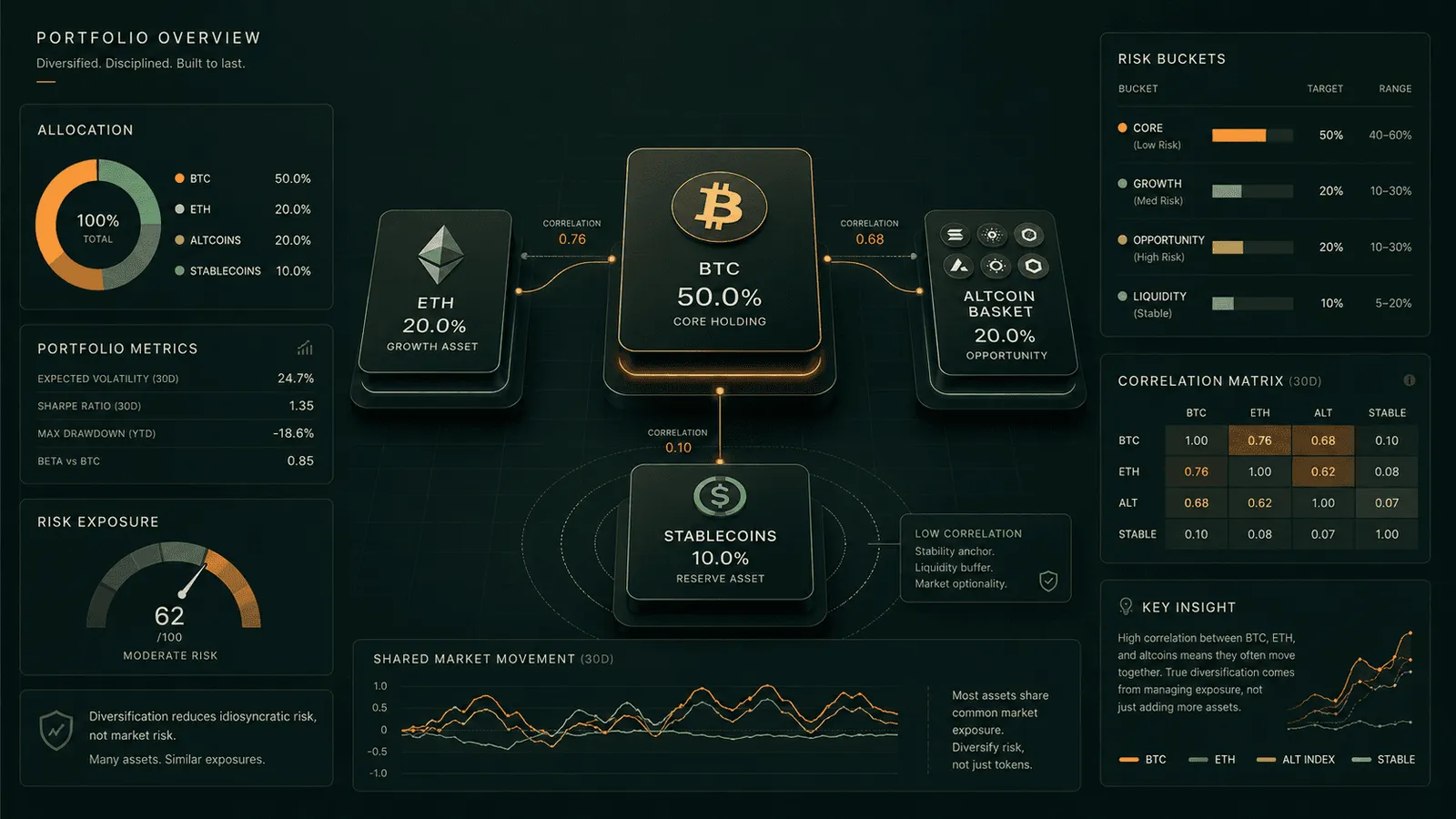
Crypto Portfolio Diversification Guide
By Tommy Tietze, CEO of ArrowTrade AG A portfolio with twelve coins can still be one trade. That sou...
Crypto Correlation: Why Altcoins Follow BTC
By Tommy Tietze, CEO of ArrowTrade AG A crypto portfolio can look diversified on paper and still beh...
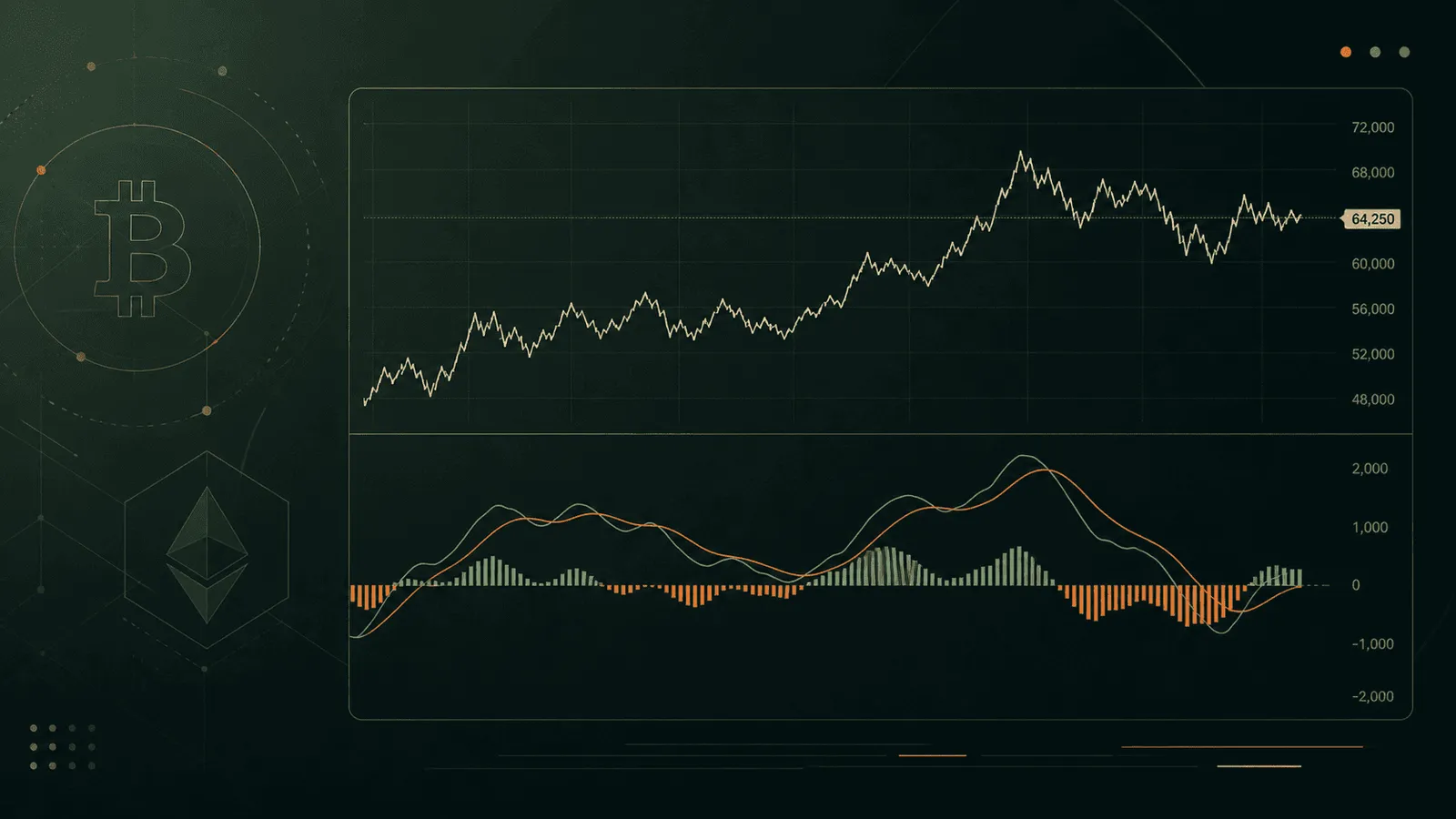
MACD Explained for Crypto Spot Traders
By Tommy Tietze, CEO of ArrowTrade AG Most traders meet MACD very early. It is already there in almo...

Crypto Drawdown Explained
By Tommy Tietze, CEO of ArrowTrade AG Drawdown is one of the most honest risk metrics in trading. It...
Systematic vs. Emotional Trading
By Tommy Tietze, CEO of ArrowTrade AG Most traders do not lose control in calm markets. They lose co...
Crypto Volatility Explained
By Tommy Tietze, CEO of ArrowTrade AG Crypto volatility is usually discussed in the wrong tone. Some...

Position Sizing in Crypto Trading
By Tommy Tietze, CEO of ArrowTrade AG Many traders spend hours searching for the perfect entry. They...