When Germany's Crypto Tax Holiday Ends: What the Proposed Repeal of the One-Year Holding Period Means for Trading Bots
 By Felix Götz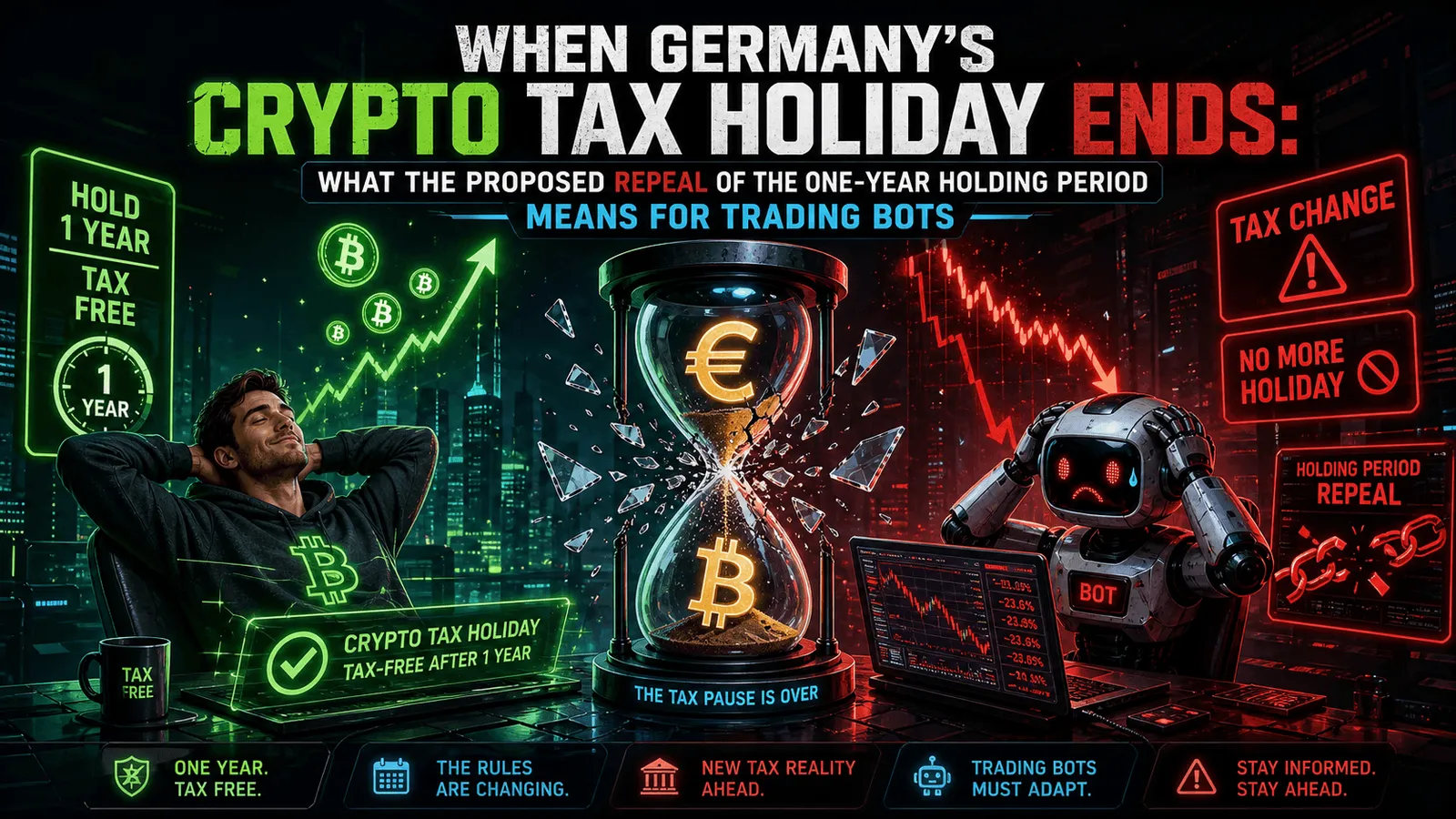
By Felix Götz – Co-Founder and CTO of ArrowTrade AG, building unCoded since 2016 in crypto trading.
Disclaimer: This article is a fact-based overview of a proposed German law and its potential implications for bot trading. It is not tax advice or investment advice. Tax rates and effective tax burdens depend on individual circumstances – for specific tax questions, consult a qualified tax advisor in your jurisdiction. The bill discussed here was filed in May 2026 and has not been enacted. Political assessments may change.
On May 5, 2026, the German parliamentary group of Bündnis 90/Die Grünen filed Drucksache 21/5752. The content is short and brutal: the one-year holding period for crypto assets under § 23 of the German Income Tax Act (EStG) would be abolished. Crypto gains would then be taxed at the personal income tax rate regardless of how long the asset was held.
If this becomes law, Germany loses one of its most distinctive features as a crypto jurisdiction. The current rule – sell after one year and pay zero tax on gains – has made Germany a relatively favorable place for serious long-term crypto investors. The proposed change would make every crypto sale taxable, full stop.
For trading bots, this is a particularly interesting development. On the surface, it looks bad – higher taxes on all crypto gains. Look closer, and a different picture emerges. Bots could actually become relatively more attractive when the tax advantage of long holding disappears.
Here's the sober analysis of what's actually in the bill, what's politically realistic, and what it would concretely mean for bot trading strategies in Germany.
What the bill actually proposes
The bill amends § 23 EStG to remove crypto assets from the one-year holding period exemption. Currently, under German Federal Fiscal Court (BFH) jurisprudence (ruling of February 14, 2023 – IX R 3/22), crypto assets count as "other economic goods" (andere Wirtschaftsgüter) that can be sold tax-free after one year of holding when held in private wealth (Privatvermögen).
Under the proposal, every realized gain from a crypto sale would be taxed at the personal income tax rate – regardless of whether you held the coin for one day or ten years. Tax rates depend on the individual's total taxable income. The standard top income tax rate is 42%, applying from approximately €68,500 (single) up to €277,826. Above that threshold, the so-called "Reichensteuersatz" of 45% applies. Both rates are subject to the solidarity surcharge of 5.5% on the tax owed (where applicable above income thresholds), plus church tax for those affiliated. For a high-income trader, the combined marginal burden on crypto gains can reach roughly 47-48%. For most retail traders with moderate incomes, the actual effective rate will be lower – often in the 25-35% range depending on total income and filing situation.
The bill's stated reasoning: crypto assets have proven, due to "their high volatility, their negligible utility as a payment instrument, and the systemic risks they have created," not to be a "digital equivalent of gold" and should therefore be treated differently for tax purposes.
Important detail: the new rules would only apply to crypto assets acquired after December 31, 2025. Investors who bought before 2026 and have already met the one-year holding period would be unaffected. Germany's Federal Constitutional Court has previously ruled that "the mere possibility of being able to realize gains tax-free in the future" does not constitute a constitutionally protected legal position, so applying the change to already-acquired assets where the holding period hasn't yet expired is constitutionally permissible.
The bottom line in one sentence: The bill would shift Germany from one of the few crypto markets with tax-free long-term hodl into a normal high-tax market for realized crypto gains. For bot trading specifically, this means: the comparative advantage of passivity disappears, but the tax burden on active bots remains high.
What's politically realistic
Bündnis 90/Die Grünen is currently in opposition. A bill from them won't become law without support from the governing coalition.
Position of the governing parties:
- CDU/CSU has officially stated they see "no reason" to change the existing rule. Their argument: the special treatment of crypto assets as "other economic goods" alongside gold or foreign currencies is systematically consistent. Abolishing the one-year period only for crypto would break that systematic logic.
- SPD is divided. The Seeheimer Kreis (which includes Finance Minister Klingbeil) had previously called for abolishing the holding period in a strategy paper. This position did not make it into the coalition agreement with CDU/CSU, suggesting SPD leadership won't push it against the coalition partner.
- AfD strongly opposes the bill.
- Die Linke had filed a similar resolution earlier, which was rejected by majority vote.
The realistic assessment: as long as CDU/CSU holds its position and SPD prioritizes coalition stability over this particular issue, the Greens' bill in its current form will not find a majority. Politically, however, the topic is not dead. Multiple parties have it on their radar, and SPD could change its position in future negotiations.
What's already passed: The DAC-8 implementation law was passed on November 6, 2025, with the votes of CDU/CSU, SPD, Greens, and Linke. Crypto service providers must report all user transactions to the Federal Central Tax Office starting in 2026. The information landscape around crypto activity in Germany is therefore already much better than it was two years ago – regardless of whether the holding period falls.
What this would mean for buy-and-hold
The biggest loser would be classic buy-and-hold strategy for retail investors.
Today, someone holding crypto assets in their private wealth (Privatvermögen) for long-term wealth building benefits from complete tax exemption on gains after one year. On a crypto position that grows from €10,000 to €50,000 over several years, the €40,000 gain would currently be tax-free under the current § 23 EStG framework – a tax saving that could amount to €10,000-€19,000 depending on the trader's individual tax situation.
Under the Greens' proposal, that advantage disappears. The same sale would be taxed at the personal income tax rate, regardless of whether the asset was held for one day or ten years.
This fundamentally changes the rules for German crypto investors:
Hodl strategies lose their tax bonus. Anyone wanting to hold Bitcoin as digital gold for the long term has no tax incentive for patience anymore.
Realization timing becomes more important. In years with low income (sabbatical, self-employment, retirement), sales are more tax-efficient than in high-income years.
Loss harvesting becomes central. Realized losses can be offset against gains from other private sale transactions. Anyone with losses anyway should use them strategically.
For ideological hodlers, the strategy itself doesn't change – they just lose the tax advantage. For hodlers who hold primarily for tax reasons rather than to trade, the entire calculation shifts.
⚠️ What this means for trading bots
Here's where it gets interesting. At first glance, the tax tightening looks bad for all crypto activities, including bots. On closer inspection, a more nuanced picture emerges.
Bots have always been in the "bad" tax bracket
Anyone running a trading bot doesn't hold most positions for a year anyway. Bot trading produces thousands or tens of thousands of trades per year, the overwhelming majority of which fall well below the holding period. Bot gains are therefore already taxed at the personal income tax rate – the holding period has never really applied to active bot traders.
This means: abolishing the holding period hits bot traders less hard than buy-and-hold investors, because most bot trades were already in the progressive tax bracket. The status quo barely changes for bots.
The relative attractiveness of bots increases
When hodling loses its tax advantage, the direct comparison "bot vs. holding" looks different.
Today (with holding period):
- Long-term hodl of crypto assets in private wealth = 0% tax on gains after one year
- Bot trading = personal income tax rate on all gains
- Tax disadvantage of bots: substantial
Under the proposal (without holding period):
- Long-term hodl of crypto assets in private wealth = personal income tax rate on all gains
- Bot trading = personal income tax rate on all gains
- Tax disadvantage of bots: none
This isn't an advantage for bots – it's the elimination of a disadvantage. The previous tax incentive to simply hold rather than actively trade would disappear. The question "is active trading worth it after taxes?" becomes easier to answer with "yes," because the tax bonus for passivity vanishes.
For serious traders who have weighed hodl against bot trading, the math shifts toward bots.
What becomes operationally more important
If the bill passed, three things would matter more:
Net edge instead of gross edge. A bot strategy must remain positive after taxes, platform costs, and trading fees. A strategy with 12% gross return that lands meaningfully lower after personal income tax plus platform costs plus tax software is objectively a different investment than a 12% strategy on currently tax-free crypto held in private wealth for over a year. The exact net result depends on the individual's tax bracket – which is precisely why running this calculation on your own actual situation matters more than relying on generic estimates.
Loss offsetting becomes central. Losses from crypto trades can be offset against gains. Anyone running a bot with mixed results can actively use losses to reduce tax burden. Bot platforms that deliver clean trade history and tax-usable reports become more important.
Platform pricing models gain importance. With significant tax burdens on gross gains, additional platform costs eat the rest. A subscription due every month regardless of trading success costs even more in net-relative terms after taxes. Profit-sharing models that only take a share in profitable months are structurally better positioned in a high-tax environment.
What this means for different bot strategies
Not all bot strategies are equally affected by tax tightening.
Grid and DCA bots on hodl coins
Anyone running DCA bots with the idea of accumulating crypto long-term and selling them tax-free after a year loses that advantage entirely. The strategy continues to work mechanically, but the main tax reason for it falls away.
High-frequency strategies
Bots that realize many small gains barely change operationally. They already have full tax burden today. However, tax optimization moves closer to strategy decisions: high-frequency strategies produce more realized tax events than lower-frequency ones, which makes cash-flow planning for taxes more complex.
Trend and momentum bots
These become relatively more attractive. They realize gains cleanly at clear trend reversals, which is tax-plannable. When every sale is taxed anyway, the argument "but holding is tax-free" loses its power, and a trend strategy can play to its operational strengths.
Mean reversion strategies
Become more sensitive to small edges in a high-tax environment. A strategy with a thin theoretical edge per trade, after taxes plus platform fees plus slippage, may have very little net advantage left. This makes backtest discrepancies between gross and net more painful.
Who actually benefits from the change
The Greens' estimate for additional revenue is "at least 5 billion euros" annually. This number is optimistic. A look at Austria, where the holding period was already abolished, shows only 33.8 million euros in actual additional crypto tax revenue in 2024. Extrapolated to Germany, that would be more like 100-150 million euros – not 5 billion.
The real effects of an abolished holding period would likely be:
More sales before 2026 by German hodlers wanting to use the grandfather clause.
Migration to more tax-friendly jurisdictions by mobile traders.
Higher compliance complexity through DAC-8 reporting and personal income tax registration.
Less tax advantage for passive strategies versus active trading.
The federal government doesn't gain anywhere near as much in tax revenue as the Greens estimate. But it loses a location factor that had made Germany attractive for serious crypto investors.
What you should do now (even if the bill doesn't pass)
Regardless of whether the bill becomes law in its current form, German crypto traders should address several things in 2026:
DAC-8 is already reality. Crypto service providers report all transactions to the Federal Central Tax Office starting in 2026. Anyone who has been casual about crypto taxes should expect that the tax office now has substantially more information than before.
Set up clean trade documentation now. Proper tax software (Koinly, CoinTracking, CoinLedger, TokenTax) is a requirement in 2026, not optional. Bot traders produce thousands of tax events per year that cannot be captured manually.
Question platform pricing models. Subscription bot platforms cost regardless of trading success. In a high-tax environment, the percentage share of subscription costs in net profit only grows. Profit-sharing platforms like unCoded have structurally better math here – the platform earns only in profitable months, which doesn't further erode net returns during losing periods.
Understand loss offsetting. Losses from crypto trades can be offset against gains. Anyone not actively planning this gives up tax optimization.
Find a tax advisor with crypto experience. If the holding period falls, the tax treatment of crypto trading becomes complex enough that an experienced advisor is worth their fee.
The honest summary
The Greens' bill to abolish Germany's crypto holding period is real, filed, and politically serious. In its current form, it likely won't find a majority because CDU/CSU opposes it and SPD won't risk coalition stability over this issue. But the topic is not off the table. Multiple political camps have an interest in ending Germany's crypto special status.
If the holding period falls, it's a bigger shock to buy-and-hold investors than to bot traders. Bots already operate in the progressive tax bracket. What changes: the previously artificial tax advantage of hodl strategies over active trading disappears. Active trading strategies that deliver real alpha after taxes become relatively more attractive – not because bots improve, but because passive holding loses its tax bonus.
For bot platforms with subscription pricing, the math becomes even more unfavorable in a high-tax environment: fixed costs plus high taxes eat returns from both sides. Profit-sharing models that only charge in profitable months are structurally better positioned here – they cost nothing when there's nothing to tax, and their share scales with actual success.
unCoded is built exactly for this. Self-hosted, non-custodial, profit-sharing pricing without monthly subscription. In an environment where German crypto traders are simultaneously confronted with DAC-8 reporting, higher tax burden, and a potentially disappearing holding period, the combination of custody control, honest backtesting, and outcome-dependent pricing is no longer a nice-to-have but structurally necessary.
The bill probably won't pass. But the direction is clear: crypto trading in Germany is becoming tax-stricter, transparency-bound, and documentation-heavy. Anyone trading on a platform whose pricing structure doesn't work in this environment will feel it in the coming years. Anyone trading on a platform that only earns when the user earns is structurally better prepared for what's coming.
That's not marketing. That's the math of what subscription versus profit-sharing pricing actually produces in a high-tax environment.
Felix Götz is Co-Founder and CTO of ArrowTrade AG, the company behind unCoded — a self-hosted, non-custodial crypto Spot trading bot with profit-sharing pricing. ArrowTrade AG operates from Switzerland under the Swiss DLT regulatory framework. Documentation at uncoded.ch/docs . Public backtest infrastructure at uncoded.ch/backtesting .
Recommended Reading
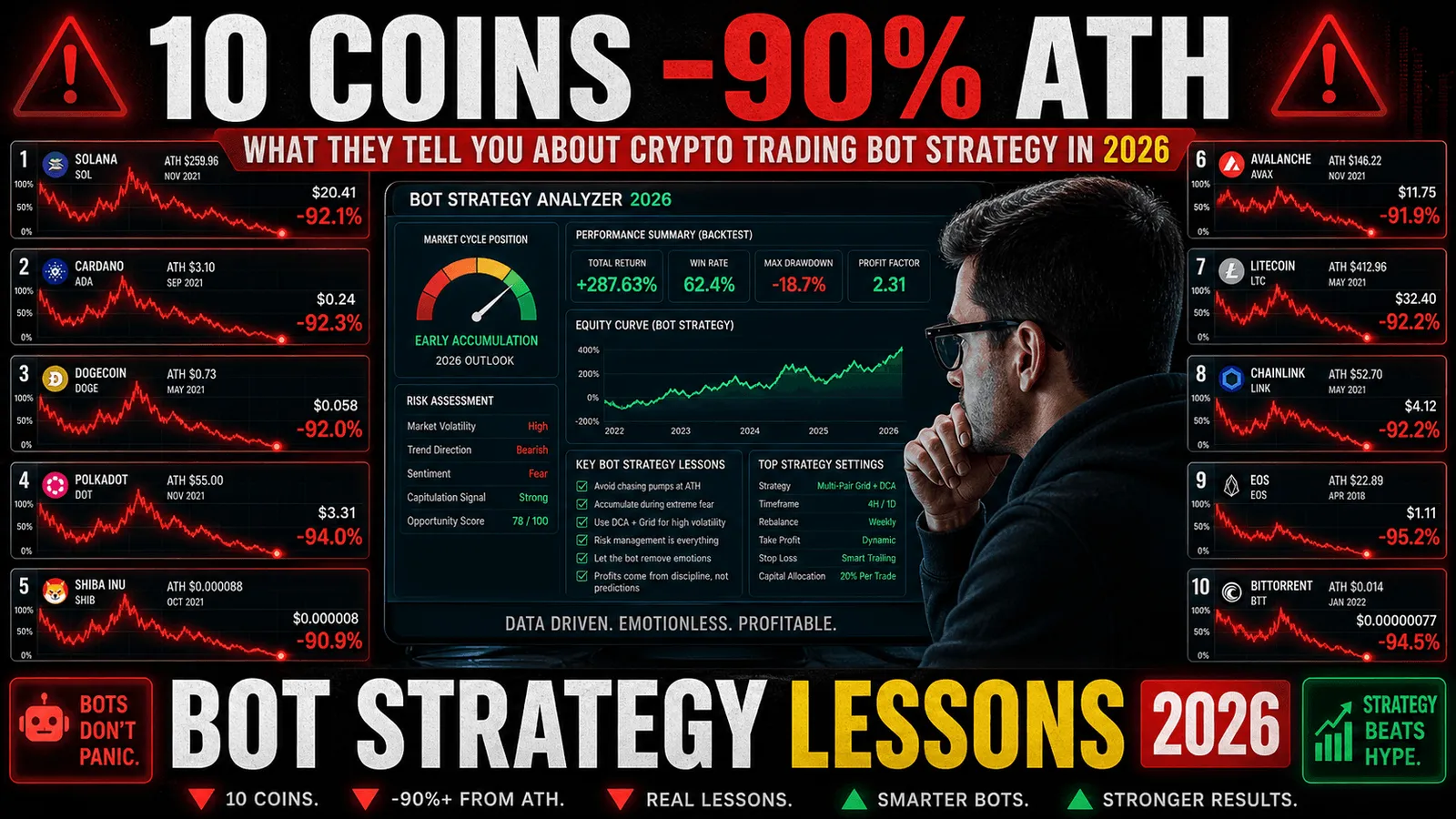
What 10 Coins Down 90%+ from Their All-Time Highs Tell You About Crypto Trading Bot Strategy in 2026
By Felix Götz – Co-Founder and CTO of ArrowTrade AG, building unCoded since 2016 in crypto trading. ...
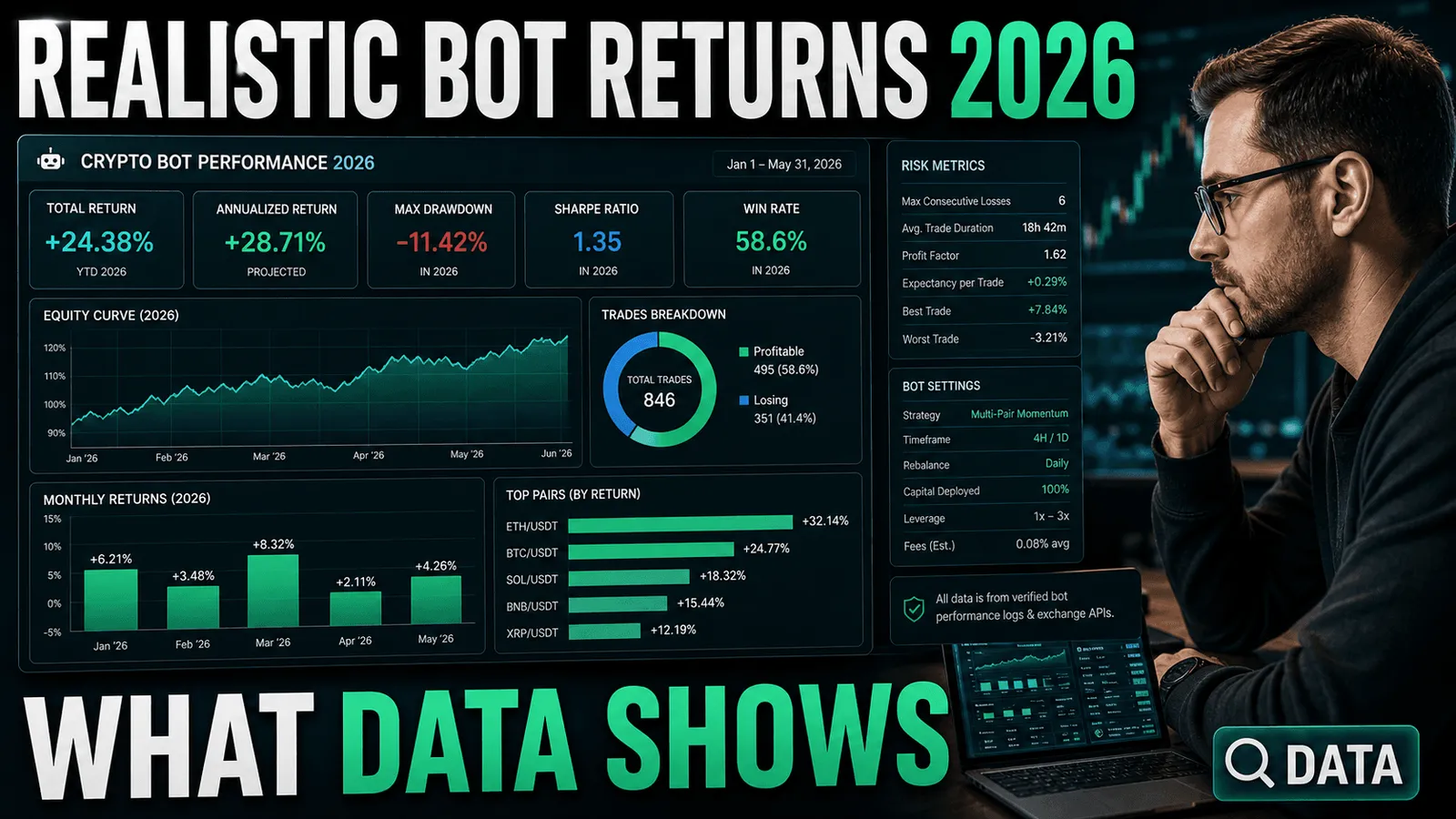
Realistic Returns from Crypto Trading Bots in 2026: What the Data Actually Shows
By Felix Götz – Co-Founder and CTO of ArrowTrade AG, building unCoded since 2016 in crypto trading. ...

How to Tell If a Crypto Trading Bot Strategy Actually Works (Or Just Got Lucky in 2023)
By Felix Götz – Co-Founder and CTO of ArrowTrade AG, building unCoded since 2016 in crypto trading. ...

Are Crypto Trading Bots Profitable in 2026? An Honest Answer After Five Years of Running Them
By Felix – founder of unCoded, trading crypto since 2016. Before we start: What follows isn't financ...

How to Build a Crypto Trading Bot That Actually Works in Production
By Felix – founder of unCoded, trading crypto since 2016. I've had this conversation probably thirty...

unCoded Is an IQ Test. That's Not a Marketing Line.
By Felix – founder of unCoded, trading crypto since 2016. Most trading bot platforms optimize for th...