Crypto Trading Bots Won't Make You Rich – But They Can Pay Your Bills
 By Felix Götz
By Felix – founder of unCoded, trading crypto since 2016.
Every time I see an ad for a crypto trading bot, it promises something absurd.
30% monthly returns. Financial freedom in 90 days. Quit your job and trade full-time from a beach in Thailand. Pictures of Lamborghinis. Screenshots of six-figure dashboards that either never existed or represent someone's single best week cherry-picked from a year of losses.
I built a trading bot. I've been running automated strategies since 2020. I know the honest version of what these tools actually do for normal people.
The honest version is much less exciting than the marketing version. It's also more useful.
The real expected outcome
Let me tell you what a well-run trading bot does for a typical retail user in 2026.
You start with €5,000 to €10,000. You configure a reasonable strategy. You let it run for a year. If everything works – the strategy is sound, the market cooperates, you don't panic during drawdowns – you probably end the year with somewhere between 2% and 20% in returns.
Not 200%. Not life-changing. Not Lamborghini money.
At €10,000 starting capital, a good year generates €200 to €2,000 in profit. A great year generates up to €3,000 or €4,000. A bad year breaks even or loses some capital. An average year over multiple cycles produces a steady, modest stream of income that meaningfully supplements your life without replacing it.
That's what trading bots actually do. They turn a reasonable pool of capital into a reasonable supplemental income stream that compounds over time.
Which is exactly why most people find them disappointing. Because that's not what they were sold.
The marketing problem
Retail crypto is flooded with people selling fantasy.
Telegram groups promising 10x monthly returns. YouTube gurus showing fake dashboards. Bot platforms advertising "AI-powered" systems that will make you wealthy automatically. Affiliate marketers pushing products they've never used because the commission is high.
This marketing works because it targets a specific emotional need: the desire to escape the grind of normal work through some kind of breakthrough. Most people aren't rich. Most people hate their jobs. Most people would love to believe there's a way out that doesn't involve decades of slow accumulation.
The promise of "trading bots will make you rich" sells directly into that desire. It doesn't have to be true to work as marketing. It just has to be seductive enough that people buy before they verify.
And then they lose money. Because of course they do. Because the promise was never realistic.
What the math actually looks like
Let me show you what realistic bot performance produces over time, so you can judge for yourself whether it's worth your time.
€5,000 starting capital, compounding at 5% per month, assuming the strategy works consistently (which is already optimistic):
After 1 year: approximately €9,000 After 3 years: approximately €28,000 After 5 years: approximately €90,000
That's with consistent 5% monthly returns, which is an excellent result that most strategies don't produce reliably over long periods. In real conditions, expect more like 2-3% average monthly returns over multi-year horizons, with significant variation year to year.
At 2.5% monthly compound:
After 1 year: approximately €6,700 After 3 years: approximately €12,000 After 5 years: approximately €22,000
That's the realistic version. A €5,000 portfolio turning into €22,000 over five years through patient automated trading. Meaningful. Useful. Not life-changing.
This is the actual value proposition. Not "become wealthy through crypto." Something more like "generate supplemental income from capital that would otherwise sit idle."
If that sounds boring compared to the Lamborghini ads, good. Boring and realistic is what actually works.
What bots are good for
Bots are genuinely good at a specific set of things that humans are bad at.
Executing rules consistently. You decided to take profit at 3% above entry? The bot does it at 3%. Every time. It doesn't second-guess. It doesn't wait for "just a little more." It doesn't forget during dinner.
Running 24/7. Crypto markets don't sleep. Humans do. A bot watching your positions while you're asleep catches moves you'd miss. That's real value, not hype.
Managing emotions out of the equation. The single biggest reason retail traders lose money is emotional decision-making. Panic selling during drawdowns. Greed preventing profit-taking. Revenge trading after losses. Bots don't do any of that. They execute whatever rules you configured, regardless of what the market is doing to your feelings.
Handling concurrent complexity. Running five different strategies on seven different tokens simultaneously is impossible for a human to manage manually. Trivial for a bot.
These are real advantages. Over time, they compound into meaningful returns for patient operators. They don't produce overnight wealth. They produce discipline at scale, which is a different and ultimately more valuable thing.
What bots are not good for
Bots are not magic. They don't predict the future. They don't find signals humans can't see. They don't produce returns that exceed what a disciplined human could theoretically achieve – they just produce those returns more consistently by removing the human failure modes.
Bots don't overcome bad strategies. If you configure a strategy with no edge, the bot executes that edgeless strategy perfectly and loses money perfectly. The bot isn't the strategy. The strategy is the strategy.
Bots don't work in all market conditions. Every strategy has regimes where it performs well and regimes where it breaks. A bot will keep running during the bad regimes unless you configure it to stop. Pretending otherwise is how people lose their entire portfolios during cycles that don't match what they optimized for.
Bots don't eliminate risk. They can manage risk better than emotional humans, but risk still exists. Markets crash. Exchanges fail. Tokens delist. Your strategy has a bad quarter. These things happen whether a human or a bot is running the capital.
If you expect a bot to solve trading for you, you'll be disappointed. If you expect a bot to consistently execute a strategy you've validated yourself, you might be pleased with the results.
The electricity bill framing
I said something in an interview recently that felt right: it would be great if people could pay their electricity bill with their trading bot.
That's actually the realistic ambition for most retail users. Not wealth. Not financial freedom. Paying your electricity bill every month from a capital base you control, running on strategies you configured, with tools you understand.
An average German electricity bill is around €80-120 per month. €1,000-€1,500 per year. For a €10,000 portfolio producing 15% annual returns, that's entirely achievable. For a €25,000 portfolio producing the same percentage, you've now covered electricity plus internet plus a meaningful fraction of your monthly groceries.
This isn't glamorous. It's also real. And real beats seductive-but-fake in every scenario that matters.
The people I see doing well with trading bots aren't the ones chasing the 30% monthly return fantasy. They're the ones who set up a reasonable system on a portfolio they can afford to lose, generated 10-20% annually over multiple years, and treated it as a useful supplemental income stream that compounds quietly in the background of their actual lives.
Those users are boring. They don't post screenshots. They don't make YouTube videos. They just let it run and let the numbers accumulate. They're also the only users who are still around three years later, because they didn't expect what nobody can deliver.
The honest sales pitch
If I were writing an honest ad for trading bots, it would go something like this:
"Automate rule-based execution of trading strategies you've validated yourself. Probably generates 5-20% annual returns in favorable conditions, less in bad markets. Requires some technical setup and ongoing attention. Will not make you rich. May generate enough supplemental income to noticeably improve your quality of life over multi-year horizons. Actively lose money if you use it without understanding what you're doing."
That's not what the ads say. Because that version doesn't sell.
But it's the version that turns out to be true. And the users who sign up based on realistic expectations tend to become long-term successful operators. The users who sign up expecting miracles quit within months, angry at the product for not delivering what it never could have delivered.
What this means for you
If you're considering a trading bot, ask yourself honestly what you're looking for.
If you want wealth-building that moves fast, trading bots aren't it. No retail tool is. Wealth-building that moves fast is mostly either luck or concentrated risk-taking that usually ends badly.
If you want supplemental income from capital you already have, trading bots might work for you. Set realistic expectations, allocate an amount you can afford to lose, use tools you understand, and let compounding do the work over years rather than months.
If you want to avoid work by outsourcing your income to a machine, trading bots won't deliver that either. Running a bot requires ongoing monitoring, occasional reconfiguration, and the discipline to not panic during drawdowns. It's less work than manual trading. It isn't no work.
If you want to learn how automated trading actually functions and are willing to treat it as a long-term project rather than a get-rich-quick scheme, you're the user profile that actually succeeds. The bots work for you. The unrealistic crowd gets filtered out within a year.
The bottom line
Trading bots are tools. Useful ones, for the right users, under realistic expectations.
They don't replace income. They supplement it.
They don't produce wealth. They produce steady modest returns that compound over time.
They don't solve trading. They execute a strategy you've already built with more discipline than you'd manage manually.
If that's what you're looking for, the economics work. If you're looking for the fantasy version the ads keep selling, you'll be disappointed no matter what platform you choose.
The goal isn't a Lamborghini. The goal is that the electricity bill pays itself. If a bot helps you achieve that consistently for years, it's done its job.
That's enough. It should be enough. And anyone telling you otherwise is selling you something that won't survive contact with reality.
Recommended Reading
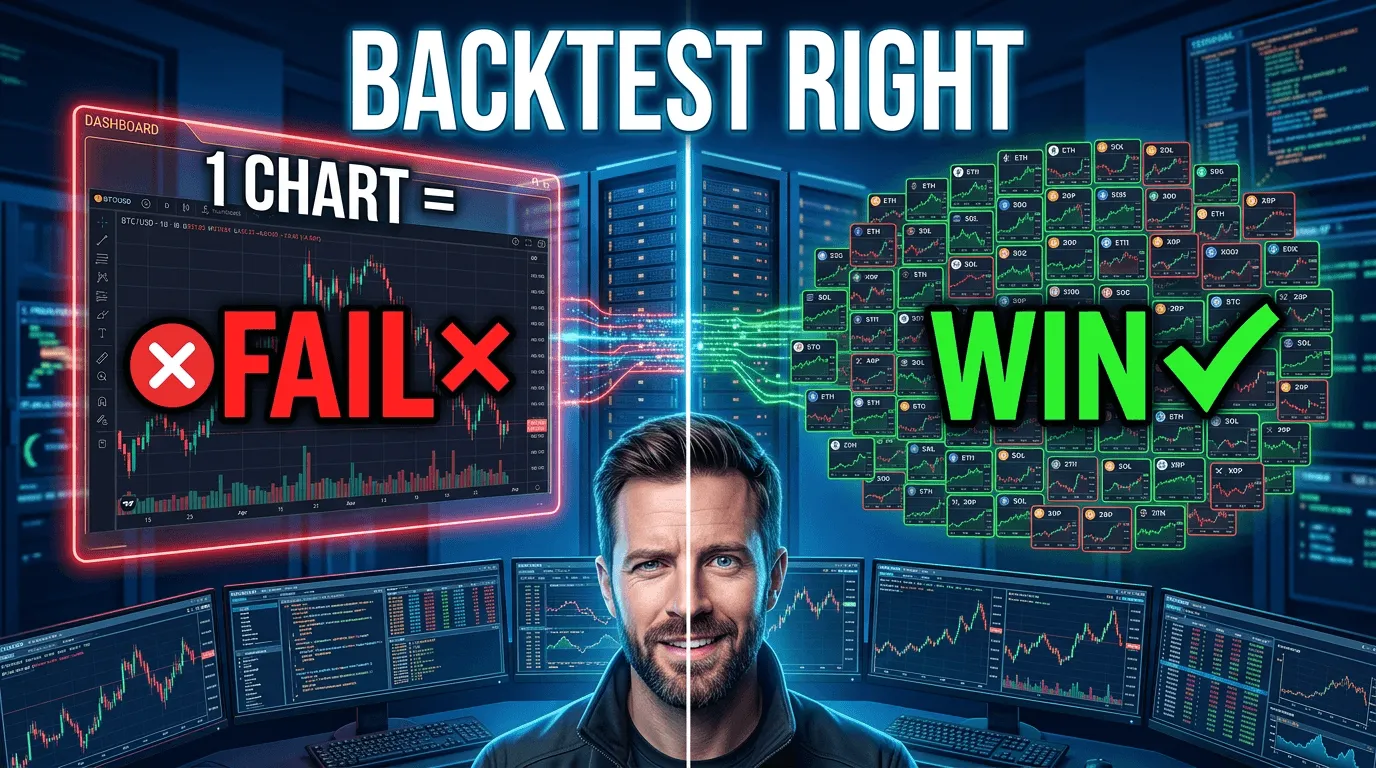
Why Your Crypto Trading Bot Backtest Fails: Test Against 100 Charts, Not One
By Felix – founder of unCoded, trading crypto since 2016. Every backtest you've ever run lies to you...

Why Crypto Trading Bot Subscriptions Are More Expensive Than They Look
By Felix – founder of unCoded, trading crypto since 2016. Most retail traders evaluate trading bot p...

The Swarm Intelligence: Why unCoded Is Built Different
By Felix – founder of unCoded, trading crypto since 2016. Most trading bots work on an implicit assu...
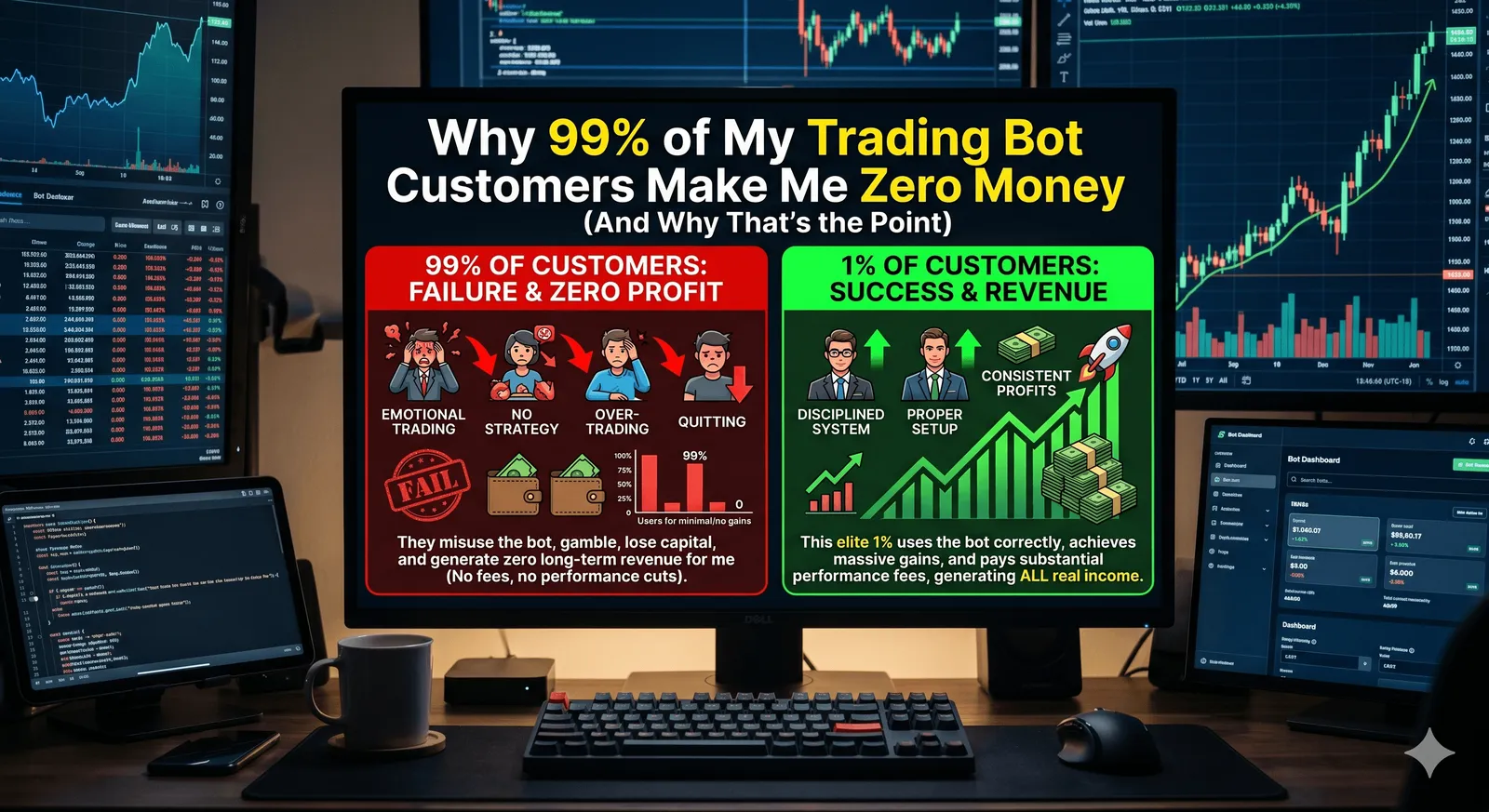
Why 99% of My Trading Bot Customers Make Me Zero Money (And Why That's the Point)
By Felix – founder of unCoded, trading crypto since 2016. Here's something most founders wouldn't wr...
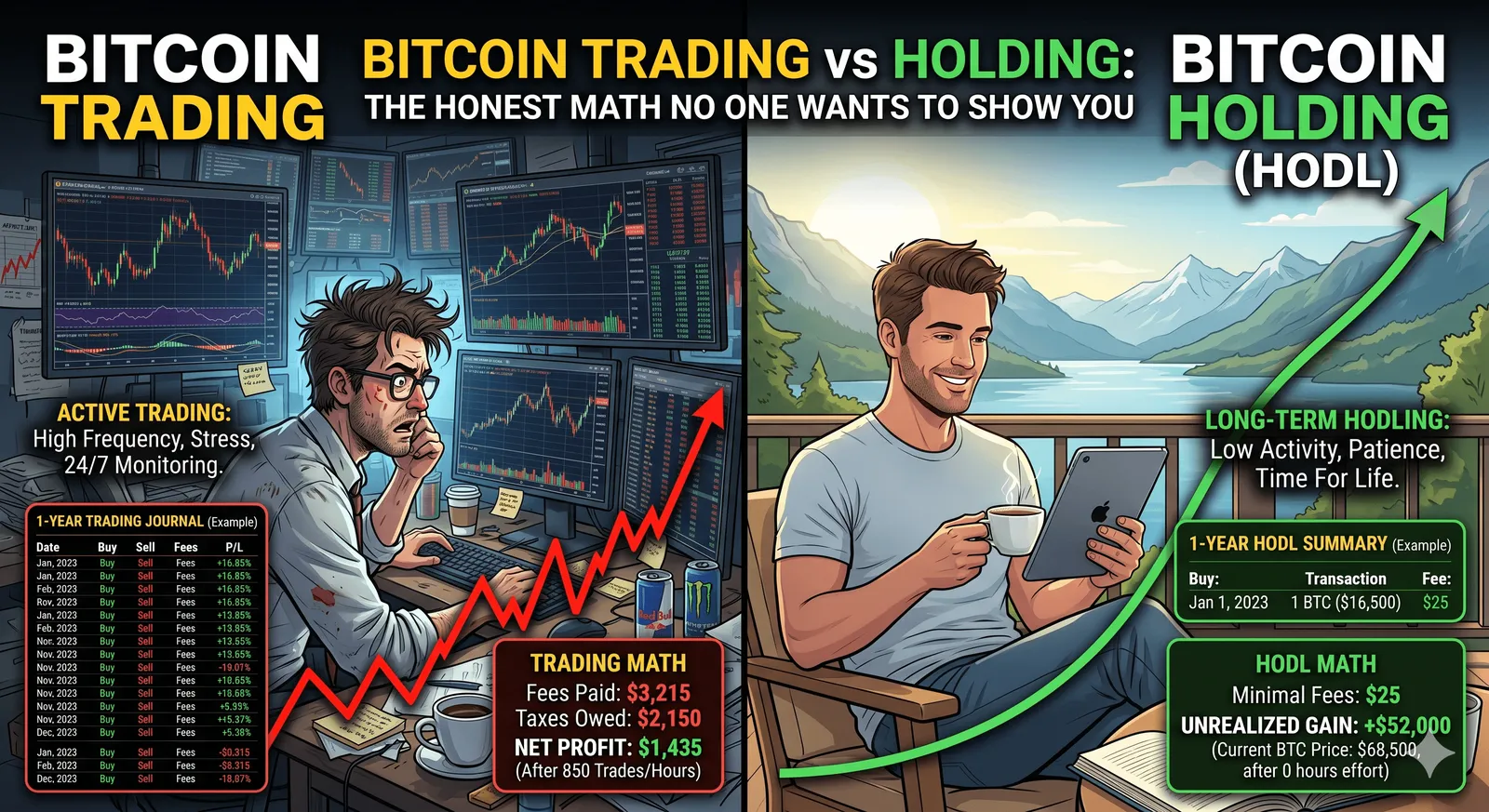
Bitcoin Trading vs Holding: The Honest Math No One Wants to Show You
By Felix – founder of unCoded, trading crypto since 2016. Let me start with the conclusion because i...
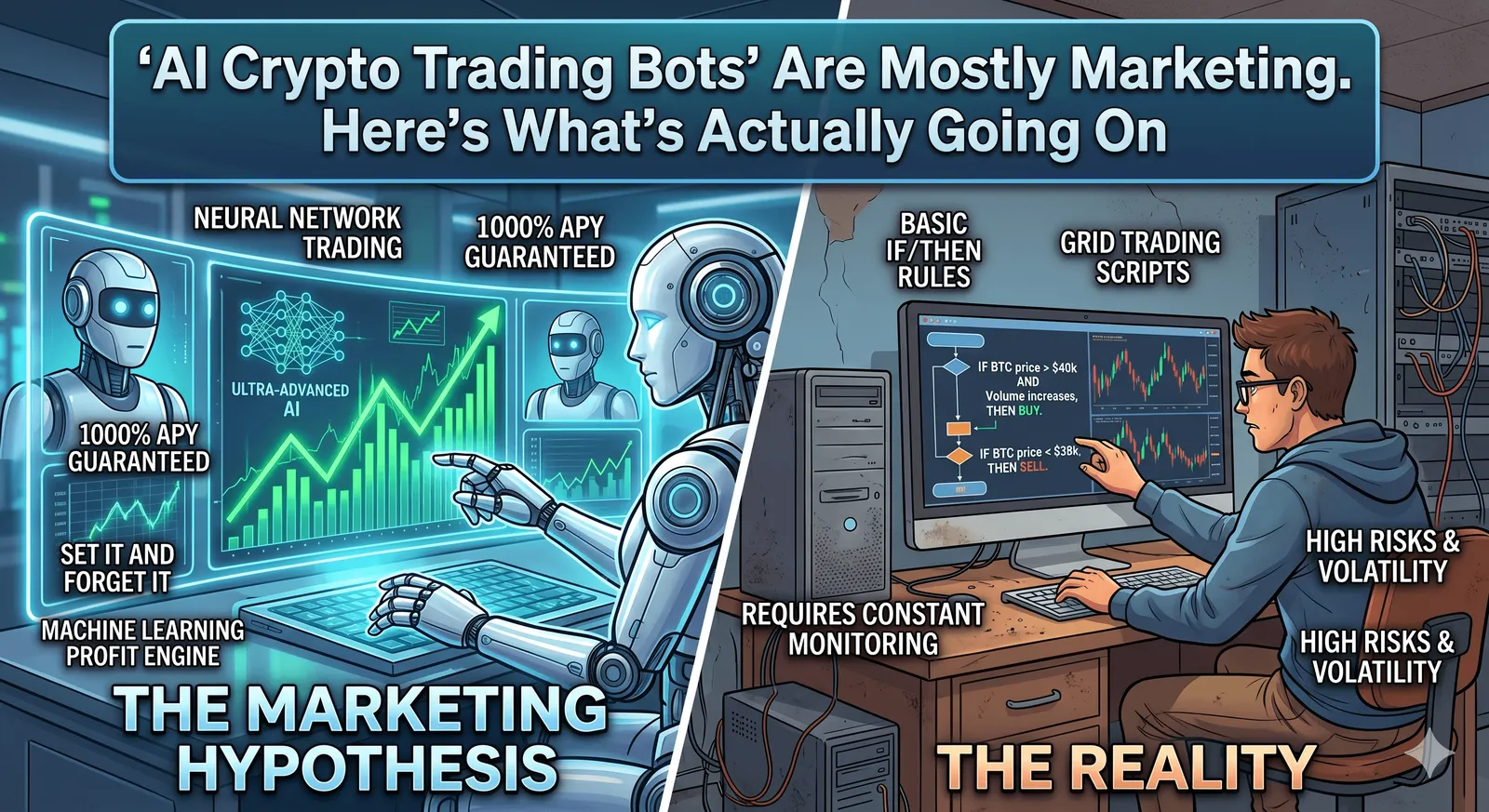
AI Crypto Trading Bots - Are Mostly Marketing. Here's What's Actually Going On.
By Felix – founder of unCoded, trading crypto since 2016. In 2026 the crypto trading bot market is f...